
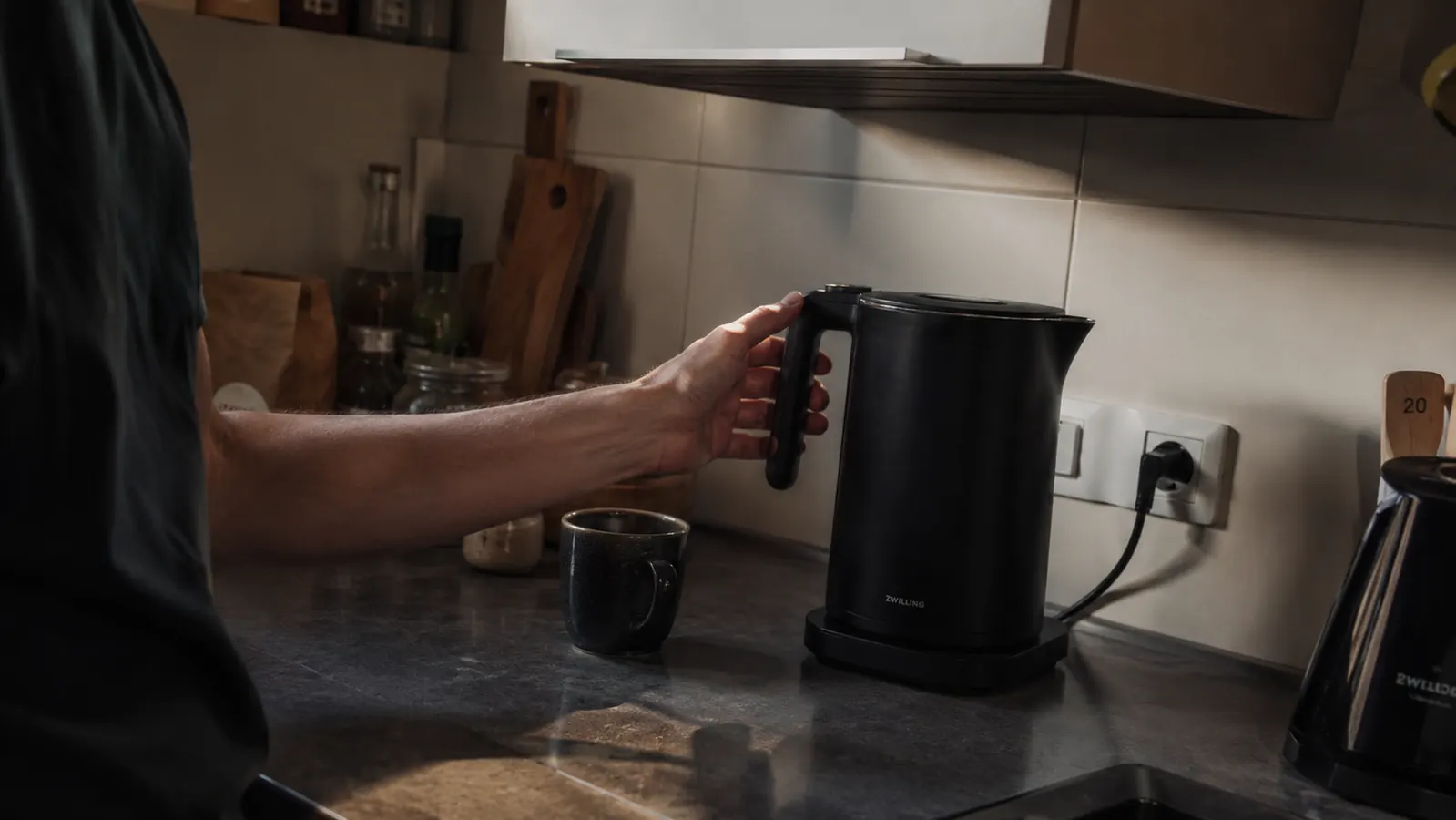
I bought the Cosori 1.7L electric kettle because I was tired of microwaving water for my morning tea and getting that faintly metallic, overheated taste that ruins the first sip of the day. I was not looking for a gadget. I was looking for a fix to a specific, annoying problem. What I did not expect was to spend the next few weeks noticing how many things about this kettle the listing mentions but does not actually explain. So I am going to do that here. The Cosori is a good product. But the things that make it good are not quite the things the marketing copy leads with, and there are a few real-world quirks that the 4.5-star average quietly papers over.
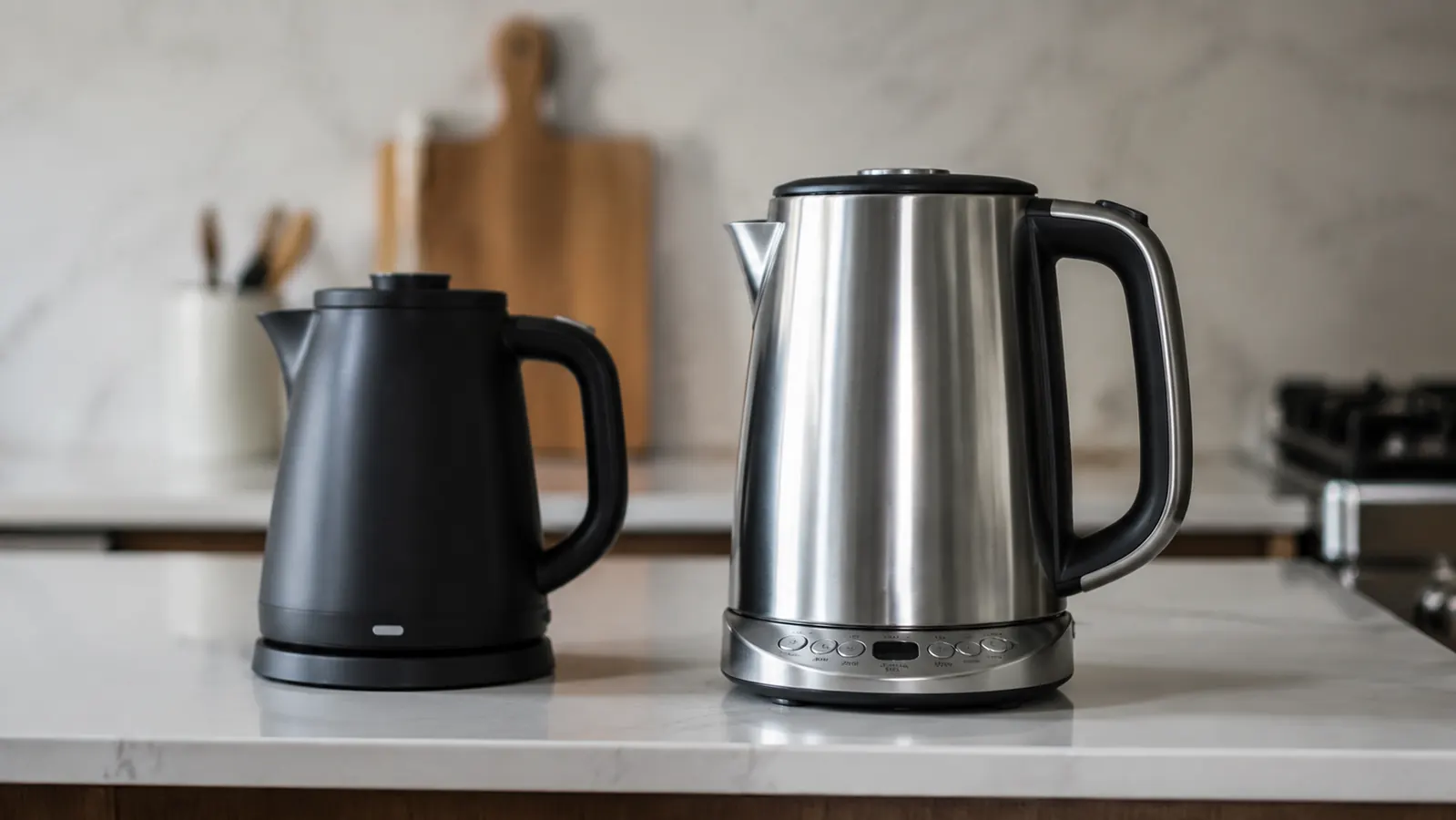
The Cosori 1.7L is a matte black stainless steel model priced affordably at the current Amazon listing. It boils water fast, shuts off automatically, and is built to keep plastic away from your water. Those are the main claims. What I want to get into is the actual texture of owning it: the cord situation, what the wide mouth means day to day, how the no-plastic claim holds up under scrutiny, when the auto shutoff is a delight versus when it catches you off guard, and the one real limitation that a meaningful portion of buyers do not clock until after they unbox it.
The Quick Verdict
The no-plastic claim is real and matters. The wide mouth is genuinely useful. The cord is shorter than you might hope. Overall a strong buy for the price, with one specific use case where you should pay more.
Amazon Check Today's Price →Still microwaving water for tea? That metallic taste is the price of not switching.
The Cosori 1.7L has no plastic touching your water, boils faster than your stovetop, and costs less than a few coffee shop runs. Check what it's going for on Amazon right now.
Amazon Check Today's Price on Amazon →How I Tested It (And What I Was Looking For)
I came to this kettle as a first-time electric kettle buyer. I had been using a small saucepan on the stovetop for years, then switched to the microwave when we moved to a smaller apartment because the saucepan took too long and the burner has uneven heat. The microwave was faster but the water tasted wrong and it was too easy to overheat it. A coworker mentioned the Cosori specifically because she had it in her studio and said the no-plastic claim was the reason she picked it over cheaper options.
I set out to answer four questions that star reviews mostly skip: Does no-plastic contact actually mean anything practical? Is the wide mouth genuinely easy to clean or is that marketing language? How does the auto shutoff behave in real use? And what is the honest case for spending more on a variable-temperature model instead? I used this kettle daily for six weeks before writing this, making tea, instant ramen, pour-over coffee, and running a few rounds of intentional hard use to see how it held up.
What "No Plastic Contact" Actually Means (And What It Doesn't)
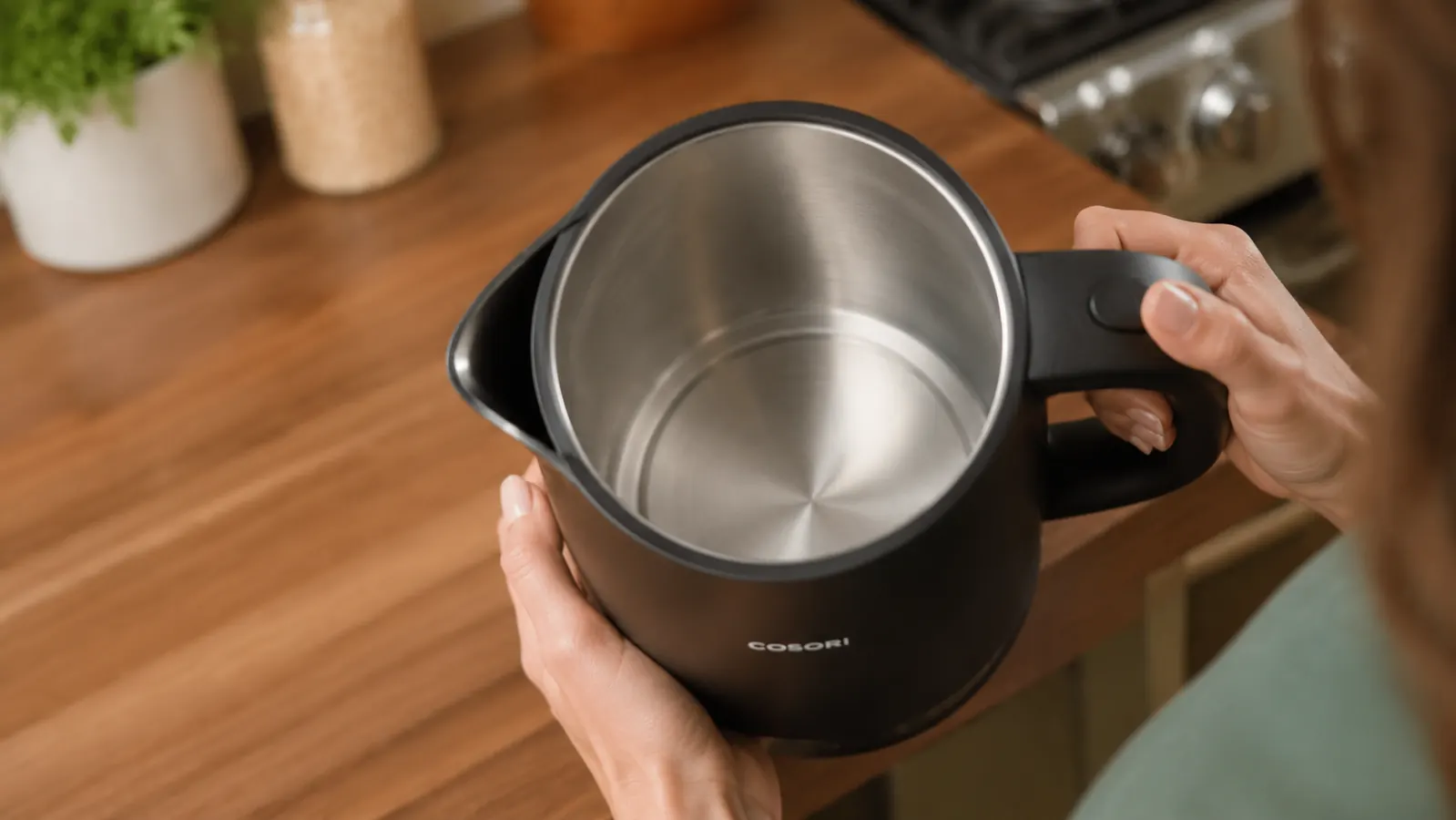
This is the claim that most interested me and the one that requires the most unpacking. The Cosori's interior walls, the heating element base, and the spout are all stainless steel. There is no plastic lining the inside of this kettle. When the water boils, it only touches metal and the small borosilicate glass window on the side used for checking the water level. That is the honest, accurate version of the claim, and it is real.
What the listing does not spell out: there is still plastic on the outside of the kettle. The handle, the on/off button, and the push-button lid release are all plastic. That plastic does not touch the water, but it does get warm at a full boil. I mention this because several buyers in the reviews were surprised, expecting the whole unit to be metal. The critical point is that none of that exterior plastic is in contact with your water. If your concern is taste and leaching, the Cosori genuinely addresses it. If you want an all-metal exterior, you are in the market for a kettle that costs three to four times as much.
The practical proof: I ran the sniff test after the first boil and every boil since. No plastic smell, no off taste. My old microwave method had a faint chemical smell I had assumed was just what hot water smelled like. It was the plastic container. That smell is gone with the Cosori.
The Wide Mouth Claim: Accurate, With One Footnote
The opening is about three inches in diameter, noticeably wider than the narrow-spout designs on a lot of traditional-style kettles. In practice this does two genuinely useful things. First, you can fill the kettle under a standard faucet holding it straight up, no awkward tilting required. Second, you can see inside when you are cleaning it, and get a brush in there if you need to.
The footnote: wide mouth means easier cleaning, not effortless cleaning. After a few weeks of daily use in my area with moderately hard water, I saw a thin white film on the stainless interior. That is mineral scale, and it happens in every kettle regardless of brand. With the wide mouth I could get a cleaning brush inside, which I could not do with a narrower kettle. A vinegar soak (equal parts white vinegar and water, bring to a boil, let sit thirty minutes, rinse three times) cleared it completely. If you are in a hard-water area, plan on doing this about once a month.
The no-plastic claim is real. The first time I boiled water without that faint chemical smell from my old microwave method, I understood exactly what I had been putting in my tea every morning for years.
The Cord Length: The One Thing Nobody Warns You About
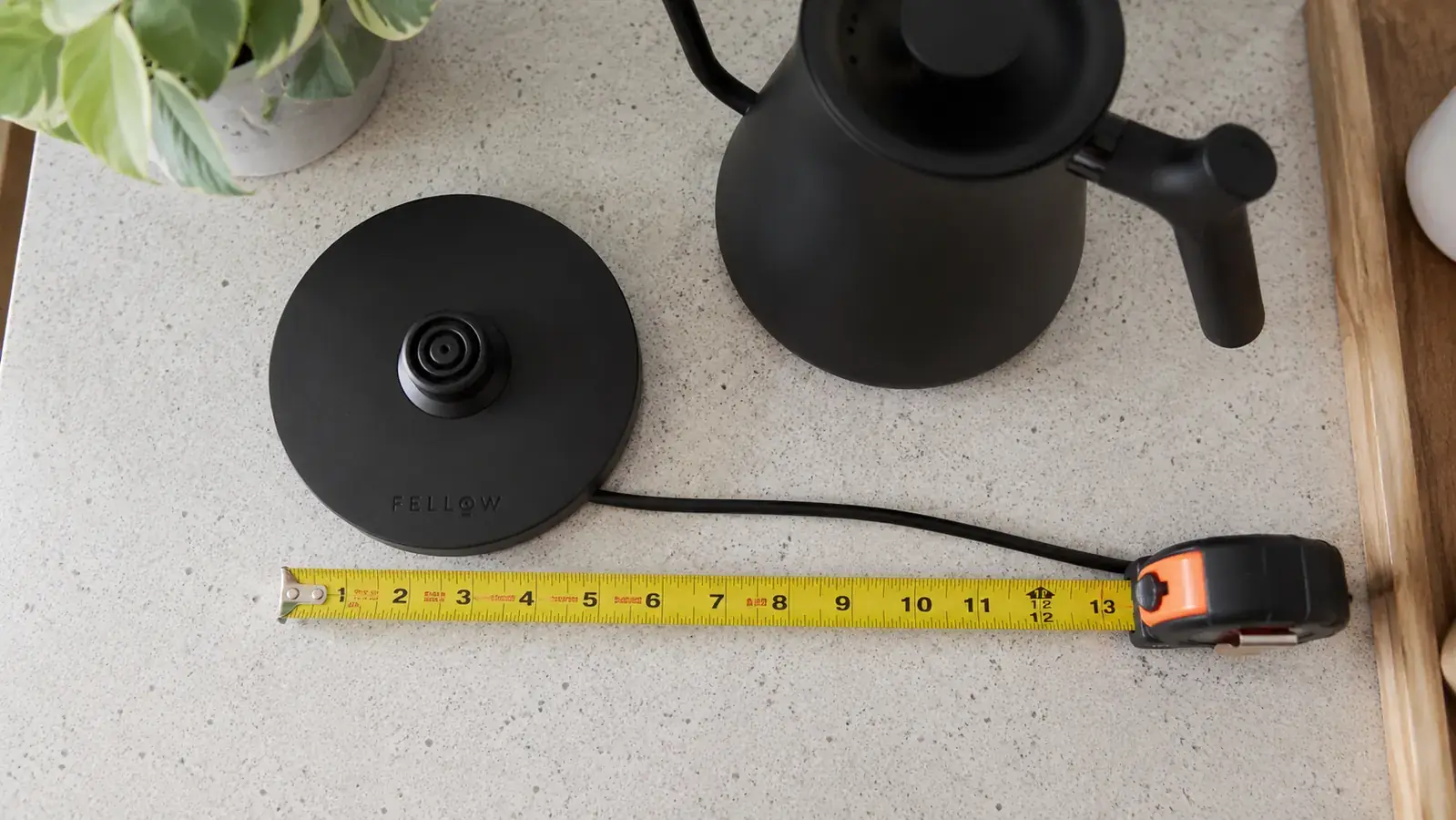
The power cord on the Cosori base is about two feet long. That is a short cord. In a kitchen where the nearest outlet is right next to your ideal kettle spot, this is not an issue. In my kitchen, the nearest outlet is around the corner, and two feet was not enough. I use an extension cord. It works fine. But I want to be the person who tells you to measure your counter-to-outlet distance before you set this thing up, because cord length is the single most common one-star complaint I found in the negative reviews, and it is entirely avoidable with thirty seconds of planning.
The 360-degree swivel base is the right design choice. You can set the kettle down in any orientation and it makes contact with the base. That is a genuine convenience feature for people who set things down in a hurry. The base is weighted and does not slide on tile or laminate counters. I tested this repeatedly by setting the kettle down harder than I normally would. It stayed put.
How the Auto Shutoff Behaves in Real Life
The auto shutoff changes the daily experience of owning a kettle more than any other feature. You press the switch, walk away, come back to boiled water. The Cosori's switch flips back to off automatically and the red boiling light turns off. No alarm, no beep. It just stops. The first few times I used it I kept walking back over to check, because I was used to standing at the stove. After a few days I stopped doing that.
One behavior worth knowing: if you get distracted and the kettle sits for fifteen minutes after the shutoff, the water will have cooled. I poured warm-but-not-right water twice in my first week because I forgot about it. The fix is simple: a quick re-boil takes under ninety seconds. The shutoff also activates if you accidentally start the kettle without enough water. It sensed the problem, shut off, and I refilled without damage. That is a protection cheaper kettles do not always have.
Scale, Mineral Deposits, and How Long Until You Notice
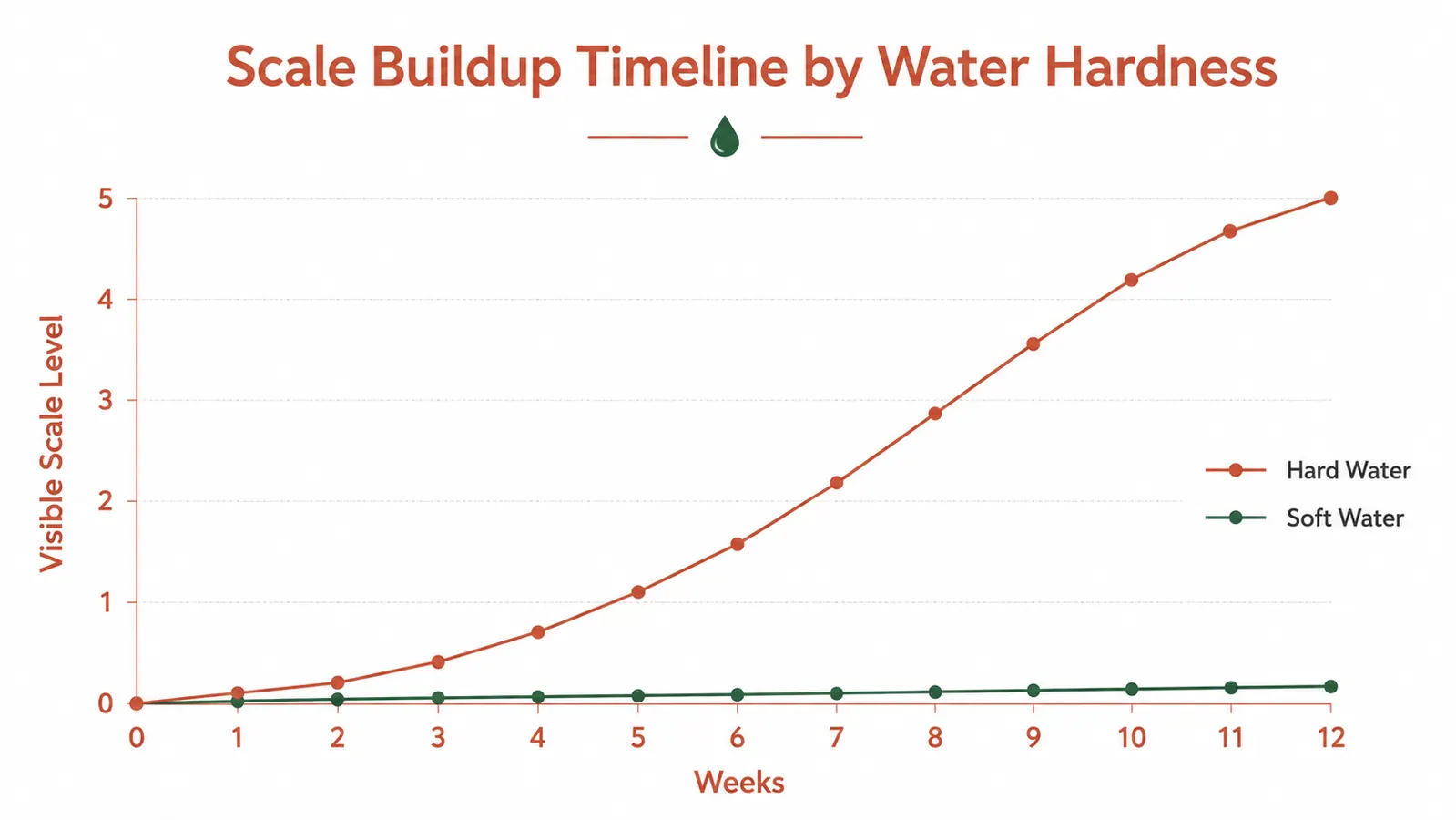
Scale buildup depends entirely on your local water hardness, not on the kettle brand. I want to say this clearly because several negative reviews blamed the Cosori for scale, when that is a water chemistry issue affecting every kettle on the market. In a hard-water area, expect a white film inside within two to four weeks of daily use. In a soft-water area, you may go three months without noticing anything.
The Cosori's flat concealed heating element is a real advantage here. Kettles with exposed coiled elements collect scale directly on the coil, which is harder to scrub and can eventually affect efficiency. The Cosori's flat disc at the bottom means scale settles on a smooth stainless surface and a vinegar soak dissolves it cleanly. I did my first descale at the three-week mark because I have hard water. It was not something I dreaded. Fifteen minutes of passive waiting, three rinse cycles, done.
Who Should Pay More for a Variable Temperature Kettle Instead
The Cosori 1.7L does not have temperature control. It boils water to 212 degrees and stops. For black tea, herbal tea, instant coffee, pour-over, oatmeal, and ramen, full boil is exactly what you want, and for most households that covers everything.
If you drink green tea, white tea, or delicate oolongs regularly, those brews should not be steeped at a full boil. Green tea at 212 degrees comes out bitter and flat. The right temperature is 160 to 180 degrees depending on the tea. You can work around this with the Cosori by boiling and waiting a few minutes before pouring. It works passably but it is imprecise. If green tea is a daily habit you care about, a variable temperature kettle at moderate pricing is the smarter buy. For black tea and everything else, the Cosori at its current price is the right call.
If you want to understand the full range of tasks an electric kettle handles well beyond just tea, including pasta jumpstarting and blanching, the breakdown is in our piece on how to boil water faster and safer with an electric kettle.
What I Liked
- No-plastic-contact claim is accurate: interior is stainless steel top to bottom with no plastic touching the water
- Wide mouth is a real daily convenience for filling under a faucet and getting a brush inside for cleaning
- Auto shutoff works reliably and also protects the kettle if you accidentally run it dry
- Flat concealed heating element makes descaling a simple vinegar soak rather than a coil-scrubbing job
- 360-degree swivel base is a genuine convenience, not just a marketing spec
- Compact base footprint does not crowd a tight counter
- Quiet at a rolling boil and does not disturb an open kitchen
Where It Falls Short
- Power cord is approximately two feet long, which may require an extension cord depending on your outlet placement
- No temperature control, which is a real limitation if green or white tea is a daily habit
- Water-level markings are in milliliters rather than cups, which requires a quick mental conversion until you learn it
- Hard-water areas will see mineral scale inside the kettle within a few weeks of daily use
- Exterior plastic components get warm during boiling, which surprises buyers expecting all-metal construction
What Actually Makes People Return It
I read through about eighty one and two-star reviews before writing this. Three patterns dominated. Cord length is the most common practical complaint, and as I mentioned, it is avoidable. The second pattern is buyers who wanted variable temperature and did not check the specs before buying. The third is hard-water users who saw scale buildup and concluded something was wrong with the kettle. It was not.
What is notably absent: complaints about the no-plastic claim being inaccurate, the auto shutoff failing, the lid mechanism breaking, or the body rusting. The core build quality holds. The complaints are almost entirely expectation mismatches that a few minutes of research would have prevented. At this price point, that is a good signal.
Who This Is For
The Cosori 1.7L is for anyone who boils water at least once a day and wants to stop thinking about it. If you are currently using a stovetop pot, a microwave, or an older plastic-lined kettle, this is a meaningful upgrade in speed, safety, and ease. It is particularly well-matched to people who have been microwaving water because they do not have reliable stovetop access. The taste difference is real, and the no-plastic interior is the reason. For a complete side-by-side on how it compares to the Hamilton Beach model at a similar price, see our Cosori vs. Hamilton Beach kettle comparison. And if you are still deciding whether any electric kettle is worth the counter space, our 10 reasons an electric kettle replaces your stovetop covers the practical math.
Who Should Skip It
Skip this one if green or white tea is a daily habit and brew temperature matters to you. The cooling workaround is fine occasionally but annoying as a routine, and a sixty to eighty dollar variable temperature model will make you happier. Skip it if your nearest outlet is more than two to three feet from your intended kettle spot and you cannot run an extension cord. And skip it if you only boil water once or twice a week, because the stovetop is perfectly adequate for infrequent use and the counter space trade is not worth it.
The no-plastic claim is real. The speed is real. The cord is short. Now you know everything.
For anyone boiling water daily from a microwave or stovetop, the Cosori 1.7L is a straightforward upgrade at a price that does not require much deliberation. Check what it is going for on Amazon today.
Amazon Check Today's Price on Amazon →