My kitchen is roughly the size of a walk-in closet. I have maybe 18 inches of usable counter space once the coffee maker and dish rack are in place, and my oven runs so hot that turning it on in July means sleeping with the window open. When I finally broke down and bought the Dash Tasti-Crisp 2.6-quart air fryer last October, I was not looking for a gadget. I was looking for a way to cook chicken tenders for my kids at 6 p.m. without losing my mind.
Eight months later, this little white machine has been used almost every single day. Not always for dinner. Sometimes just to reheat leftover pizza so the crust does not turn into cardboard in the microwave. I have strong opinions about it now, and I want to share them before you spend your money.
The Quick Verdict
A genuinely capable compact air fryer at a price that is hard to argue with, but the 2.6-quart basket means cooking in batches if you are feeding more than two people.
Amazon Check Today's Price →Tired of heating up your whole apartment just to cook a handful of fries?
The Dash Tasti-Crisp packs a real air fryer into a footprint smaller than a cereal box. If you are working with limited counter space and a limited budget, this is the one I keep reaching for.
Amazon Check Today's Price on Amazon →How I've Used It Over 8 Months
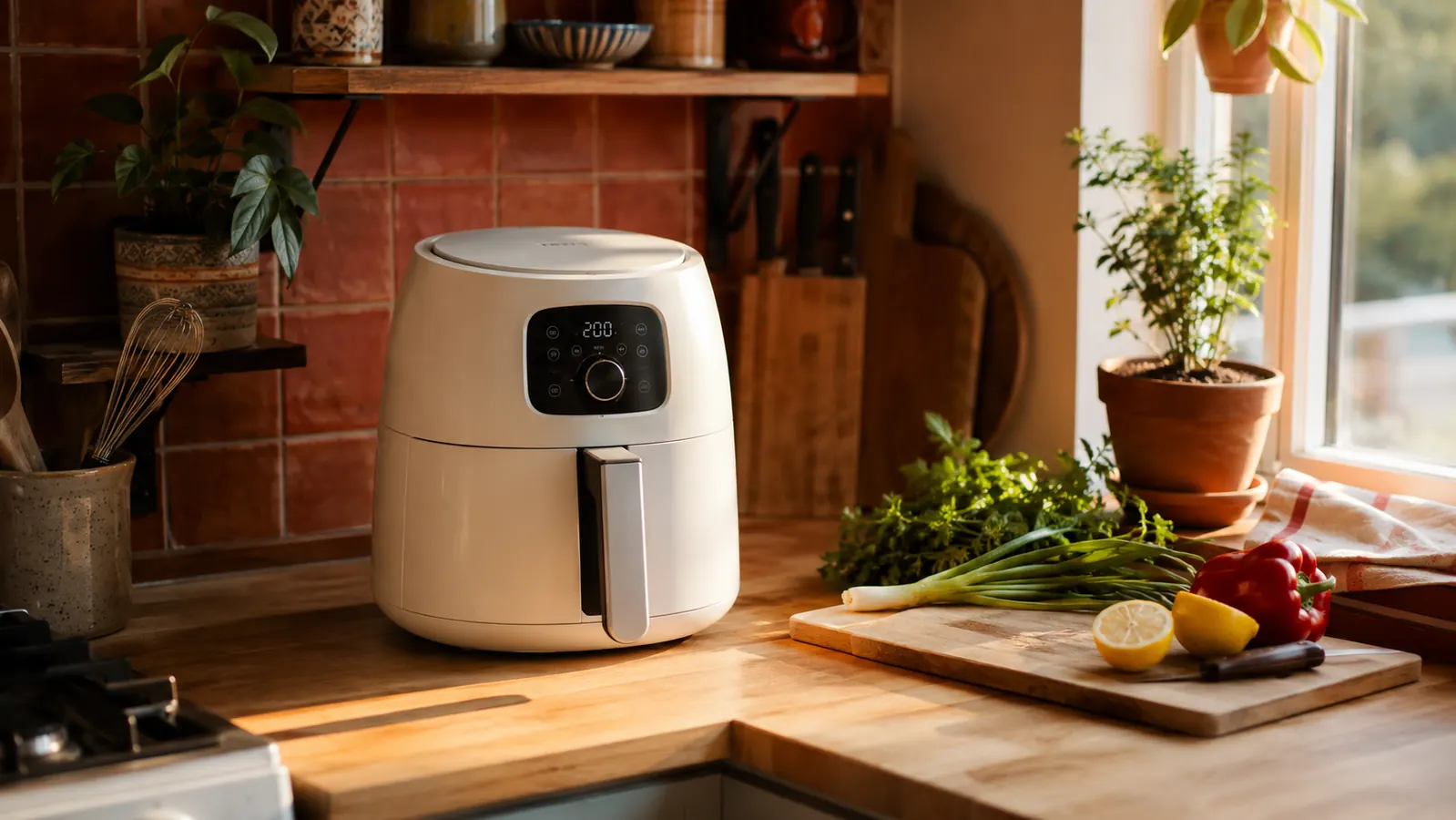
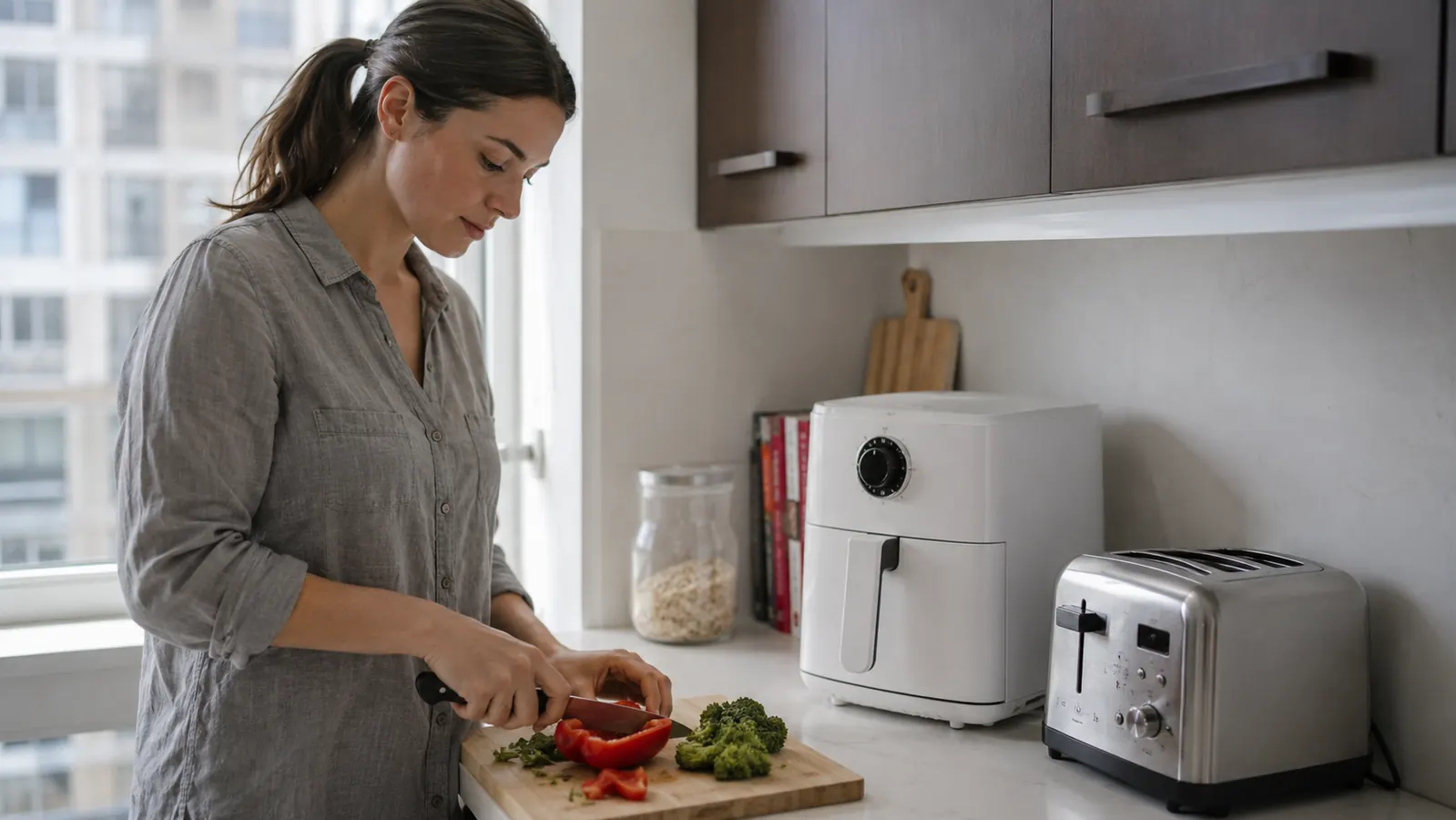
I set the Dash up on the one clear strip of counter I have, between the microwave and the sink. It fits there with about two inches to spare on each side. The footprint is genuinely small, roughly 9 inches across, which matters a lot when you are working with the kind of space I have. I also appreciated that the box was not enormous. A lot of small appliances come packaged in boxes three times their actual size. This one was compact from the moment it arrived.
In the first month I mostly used it for things I already knew how to make: frozen fries, frozen nuggets, the occasional fish stick. By month two I was cooking fresh vegetables in it almost every night because the cleanup was so much faster than using a sheet pan in the oven. By month five I was using it to reheat leftovers, warm up baked goods, and even make breakfast sausage on busy mornings. It has genuinely changed the rhythm of how I cook in this space.
I want to be honest about what that eight-month period looks like. The dial controls are basic. You set the temperature, you set the time, you put the food in. There is no digital display, no preset modes, no app to connect to. For some people that is a dealbreaker. For me it was a feature, because I am not trying to program a computer at dinnertime. I tried a digital air fryer at a friend's house once and spent four minutes reading the panel before I could start cooking. With the Dash, I had dinner in the basket inside of 90 seconds.
What the Dash Actually Gets Right
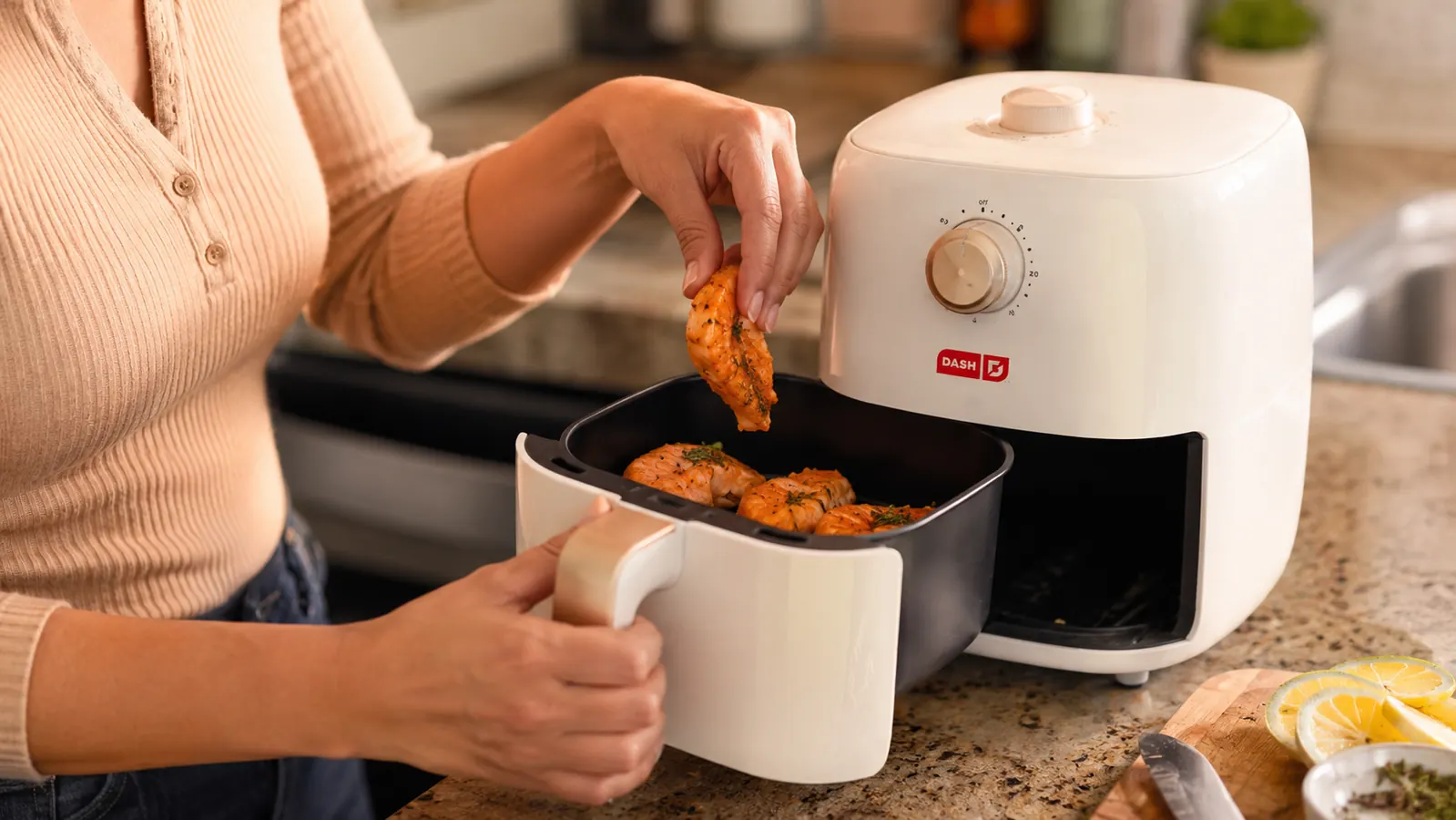
The basket is non-stick and it actually behaves like non-stick. After eight months of daily use I have not had to scrub it once. I rinse it after almost every use, and occasionally I put it in the sink with soapy water and a soft cloth. That is it. If you have ever owned a non-stick pan that stopped being non-stick after two months, this will feel like a small miracle. The basket also pops out in one simple motion and snaps back in the same way. No fiddling, no lifting the whole machine to get the basket seated right.
The auto shut-off is also real and it also works. I have left this thing running while I went to help with homework, and it has never once kept running past the timer. For a household with kids and a lot of distractions, that matters more than any performance spec. I have also noticed that it does not smell like burning plastic the way cheaper appliances sometimes do on the first few uses. Out of the box it was essentially odorless, which was a good sign.
The actual cooking results have been consistently good for the right types of food. Frozen items come out genuinely crispy, not just warm. Vegetables roast up with actual color on them. Chicken pieces cook through evenly. The 1000-watt heating element is not the most powerful on the market, but for a 2.6-quart basket it is plenty. The circulation inside the basket is strong enough that I rarely need to shake or flip food more than once, and for most frozen items I do not shake at all.
After eight months and probably 300 meals, the basket still releases food cleanly. I have never once had to soak it overnight. That alone is worth the price to me.
The Honest Tradeoffs
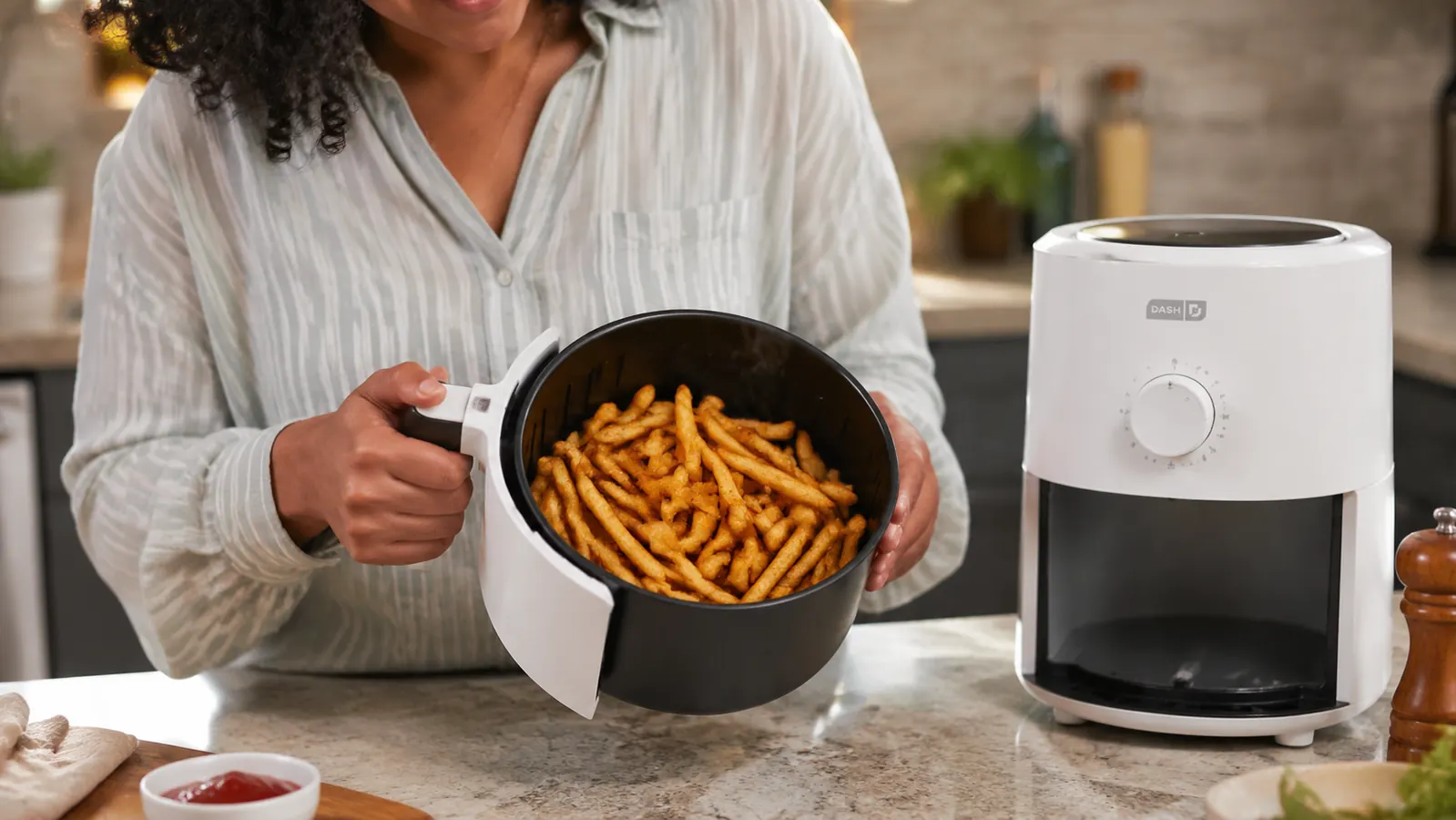
The 2.6-quart capacity is the single biggest limitation of this machine. A single serving of fries fits comfortably. Two servings fit if you shake the basket halfway through. Three servings means cooking in batches, and that adds real time. If you are cooking for a family of four and everyone eats at the same time, you will be standing at the counter for 25 minutes instead of 12. That is a real thing to know before you buy.
The dial controls also have no detent positions. You are eyeballing the temperature setting, not snapping to 375 degrees. For something like reheating pizza this does not matter. For something where precise temperature actually affects the result, like certain baked goods, it is a little frustrating. I have learned to just eyeball it the same way I would a gas burner, and it works fine, but it is not precise.
There is also no light that tells you it has preheated. You just let it run for two to three minutes before adding food, or you do not. I almost always do not, and the results are still fine. But I can see why someone coming from a fancier machine would miss that signal. The cord length is also worth mentioning: it runs about two and a half feet, which means placement near an outlet is not optional. I had to rearrange my counter setup slightly to get the cord to reach. It is not a dealbreaker, but it is something to account for when you are deciding where to put it.
How It Compares to What I Used Before
Before the Dash I was using my full oven for almost everything. In the summer that meant a kitchen that was 10 degrees hotter than the rest of the apartment for an hour at a time. In the winter it meant waiting 15 minutes for preheat before I could start cooking. The Dash is ready in two to three minutes, and it does not meaningfully heat the rest of my apartment. On a weeknight when I am already tired and everyone is asking when dinner will be ready, those saved 12 to 13 minutes genuinely change the outcome.
I also used a toaster oven for a while, a hand-me-down from my mother-in-law. The toaster oven had more capacity, but it took up twice the counter space and the cleanup was genuinely unpleasant. Grease would get on the heating elements and smoke the next time I turned it on. I gave the toaster oven away in November and have not missed it once.
If you are weighing this against a bigger air fryer, the Dash vs Ninja comparison is worth reading through. The capacity difference is real and so is the price difference. For a one-or-two-person household, the Dash is the easier choice. For a family of four eating together every night, you may want to size up. If you are more interested in technique than gear, the guide on how to get crispy results without a full-size oven goes deeper on the cooking side regardless of which machine you use.
Specific Foods I've Made and How They Turned Out
Frozen french fries are genuinely excellent. They come out with a real crisp on the outside and a soft inside, and they take about 12 minutes at 400 degrees. I use no oil at all and they are better than what I got from my oven using oil on a sheet pan.
Chicken thighs take about 22 to 25 minutes at 380 degrees and come out with crispy skin and juicy meat. I usually do two at a time, which feeds two adults and one kid with some left over. Three thighs is tight but possible if they are on the smaller side. Chicken tenders from frozen take about 10 to 12 minutes at 400 degrees and come out better than anything I have ever pulled from the oven.
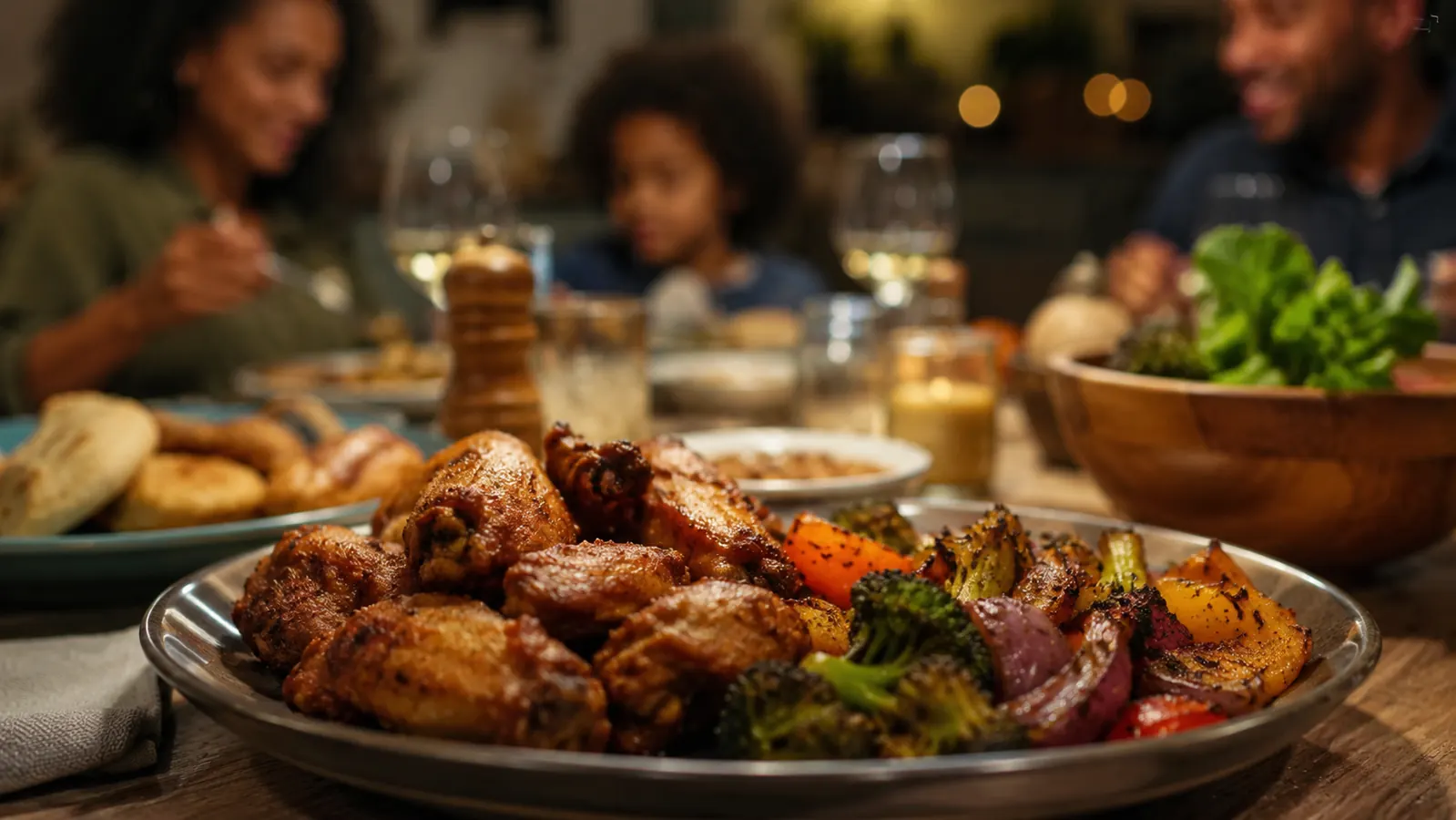
Broccoli at 375 degrees for 8 minutes with a little salt and pepper comes out with charred edges and a texture that my kids will actually eat, which is something I cannot say about steamed broccoli. Same goes for cauliflower, zucchini, and green beans. The air fryer has genuinely expanded the vegetables I can get my family to eat, which is not something I expected when I bought it.
Reheated pizza is where this machine earns its keep the most. Two minutes at 325 degrees and the crust is crispy again, the cheese is melted but not burned, and it tastes close to fresh. This alone would justify owning it. I have also used it for reheating leftover fried chicken, roasted potatoes, egg rolls, and spring rolls. All of them came out significantly better than microwave reheating. The microwave makes everything soggy. The air fryer brings things back to something close to their original texture.
What I Liked
- Genuinely compact footprint, fits in tight counter spaces
- Non-stick basket holds up after months of daily use
- Auto shut-off works reliably every single time
- Preheats in 2 to 3 minutes, much faster than a full oven
- Easy to clean, basket rinses clean in under a minute
- Produces real crisp results on frozen food and fresh vegetables
- Comes with a recipe guide that is actually useful for beginners
- No plastic smell on first use
Where It Falls Short
- 2.6-quart basket means batch cooking if you are feeding a family
- Dial controls are analog with no precise temperature detents
- No preheat indicator light
- Short cord at roughly 2.5 feet limits placement options
- No digital timer display, you estimate by the dial position
Who This Is For
This machine was made for people cooking for one or two, people with very limited counter space, and people who want a simple tool with a very small footprint and a very low price. It is also a strong choice as a first air fryer if you are not sure you will use one regularly and do not want to spend a lot to find out. If it sits unused after three weeks, you have not lost much. And in my experience, people who try an air fryer once rarely stop using it.
The Dash is also a practical second machine if you already have a larger air fryer but want something that preheats fast and does not take up much space. I know people who use a larger model for main dishes and a Dash for sides or reheating. That setup makes sense for small kitchens where you want the versatility of two cooking zones without the footprint of two large appliances.
It is also worth mentioning that at this price point, the compact air fryer pays for itself very quickly if you use it to stop spending on takeout or to avoid running a full oven for small amounts of food. I did not buy this as a money-saving tool, but it ended up being one. Running a full oven for 20 minutes to cook one portion of food is wasteful in ways that add up. The Dash changes that math significantly.
Who Should Skip It
If you are regularly cooking for three or more people and everyone eats at the same time, the 2.6-quart basket is going to frustrate you. Batch cooking works, but it adds time, and if dinner is already a logistical challenge in your household, you do not need another variable. Look at the 4-quart or 5-quart options instead. You will spend more and use more counter space, but the tradeoff may be worth it for your household.
If you want precise digital controls or preset cooking modes, the Dash is also not for you. The dial system works well once you get used to it, but it is analog and approximate. There is nothing wrong with that, but it is not what everyone wants. If you are someone who likes to set an exact temperature and walk away confident it is accurate, the Dash will be a source of mild frustration even though the results are usually fine.
If you are cooking for one or two in a small space, the Dash is genuinely one of the best values in the kitchen appliance category right now.
Compact footprint, easy cleanup, real crispy results, and a price that does not require you to think very hard about the decision. Check the current price on Amazon before it changes.
Amazon Check Today's Price on Amazon →