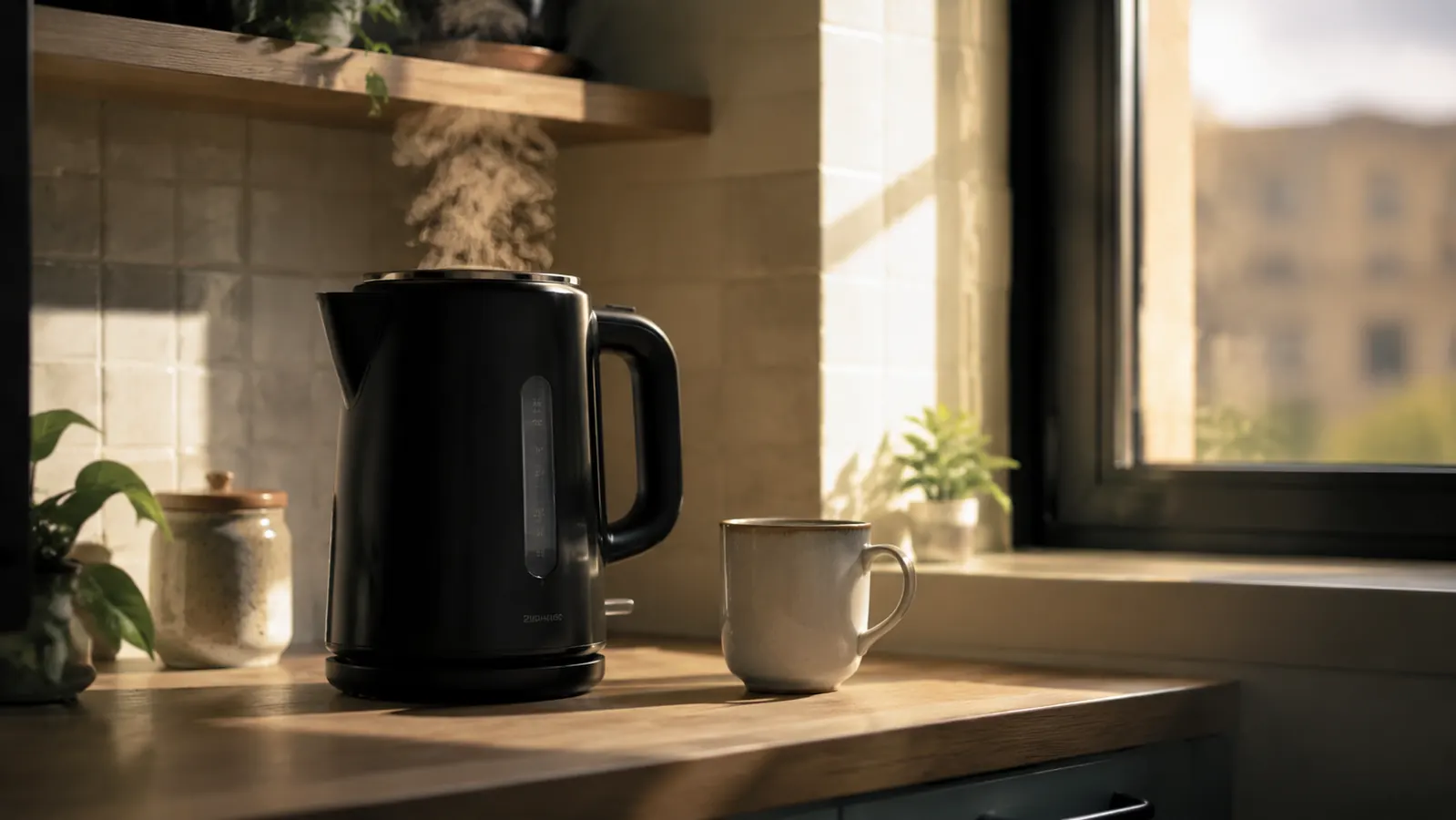
I used to stand over the stove every morning waiting for a pot of water to boil. Five minutes, sometimes eight, just hovering there in my pajamas while the kids yelled from the other room about being late. I thought that was just how it worked. Then a coworker mentioned she boiled water for her whole morning routine in under four minutes using a kettle that cost less than a dinner out. I picked one up that week and it genuinely changed the pace of my mornings. If you are still heating water on the stovetop for tea, coffee, oatmeal, or anything else, this guide is for you.
The Cosori 1.7L Electric Kettle is the one I recommend for small kitchens. It boils fast, it has a no-plastic-contact design so your water does not taste like the container, and the auto shutoff means you can walk away without worrying. At current pricing it costs less than a nice lunch, and it will pay for itself in the first month if you are the kind of person who used to run the burner for ten minutes every morning. I will walk you through exactly how to set it up and use it well, step by step.
Still waiting on a stovetop pot every morning? There is a faster way.
The Cosori 1.7L Electric Kettle boils a full pot in under four minutes, shuts off on its own, and takes up less counter space than a cereal box. Over 48,000 Amazon reviewers give it 4.5 stars.
Amazon Check Today's Price on Amazon →Step 1: Find the Right Spot on Your Counter
Before you even plug the kettle in, take a minute to decide where it lives. Electric kettles need to sit near an outlet, but more importantly they need enough clearance above them for steam to escape safely. I keep mine on the counter just to the right of the sink. That location lets me fill it without moving it, keeps the cord out of the main prep area, and puts it close to where I make coffee and tea anyway. If your counter space is tight, a small wooden riser or a dedicated corner works well. Just do not put it directly under a cabinet with less than twelve inches of clearance above the spout.
The Cosori 1.7L has a footprint about the size of a paperback book laid flat, which is genuinely small for a full-capacity kettle. I was surprised how little room it actually takes. Once you find the right spot, the base stays plugged in and the kettle itself lifts off for filling and pouring. That lift-off design is the key to using it efficiently without awkward cord management.
One practical tip: keep the cord tucked behind an appliance or along the back of the counter so it does not hang over the edge where kids or dogs can pull it. The Cosori base cord is about two feet long, which is just right for most counter setups without creating a tripping hazard.
Step 2: Fill It the Right Way Every Time
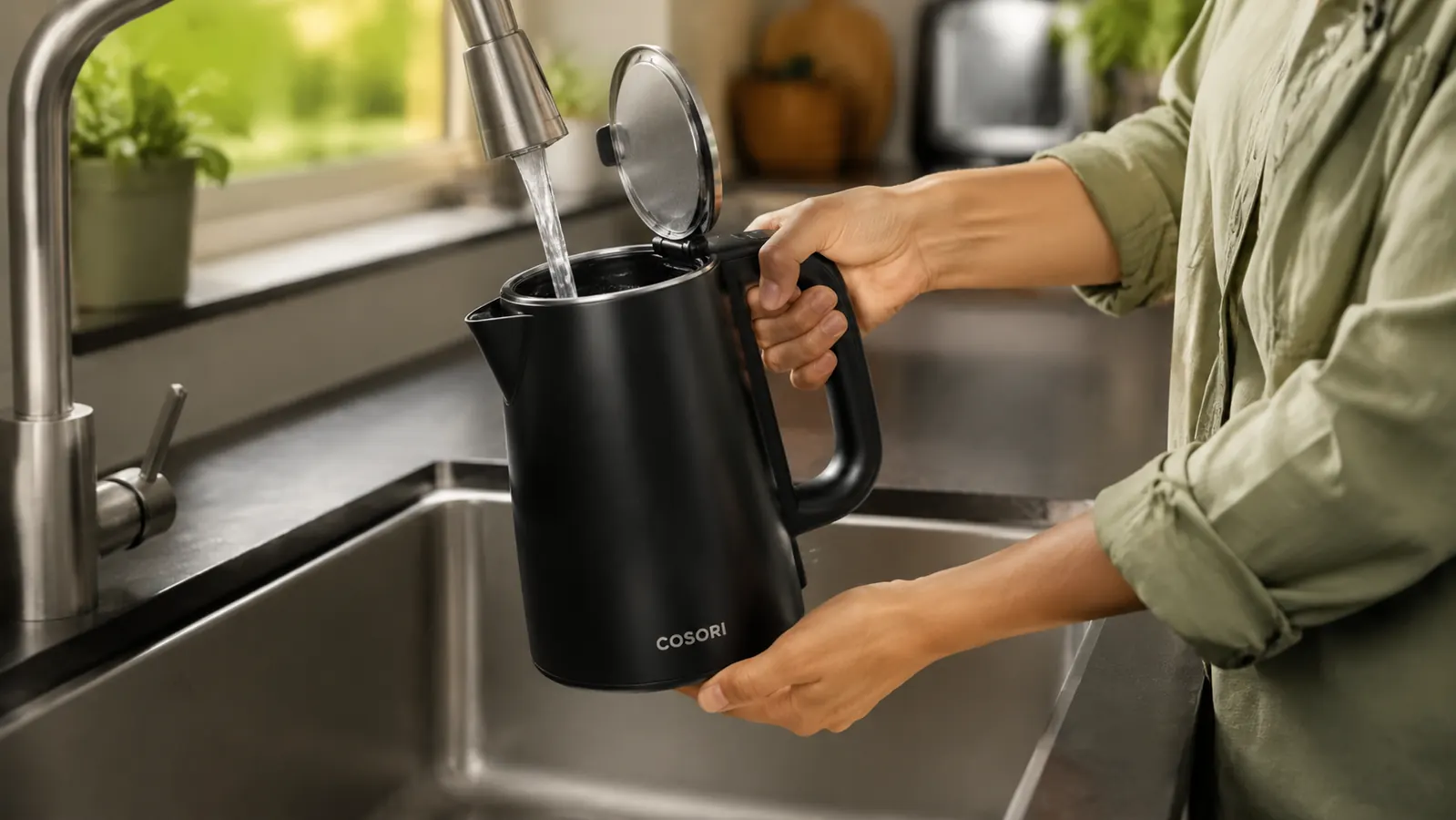
Lift the kettle off its base and carry it to the sink. The Cosori has a wide mouth opening, which sounds like a small thing until you have used a kettle with a narrow spout and spent thirty seconds trying to get water in without spilling. Wide mouth means you can fill it under any faucet angle, and it is also far easier to clean. Fill to the level you need. The kettle has a water window on the side with max and min lines clearly marked. For a single mug of tea, fill to the lower mark. For a pot of pasta or oatmeal for four, fill closer to the top.
Do not overfill past the maximum line. When water boils and steam builds, overfilled kettles can spit water out of the spout, which is a burn risk and makes a mess. The maximum line on the Cosori is 1.7 liters, which is enough to fill about seven standard mugs. For my family of four doing morning oatmeal and two cups of tea, one fill usually covers everything. That is the whole point of this appliance: one fill, one boil, done.
Step 3: Boil, Walk Away, and Come Back When It Shuts Off
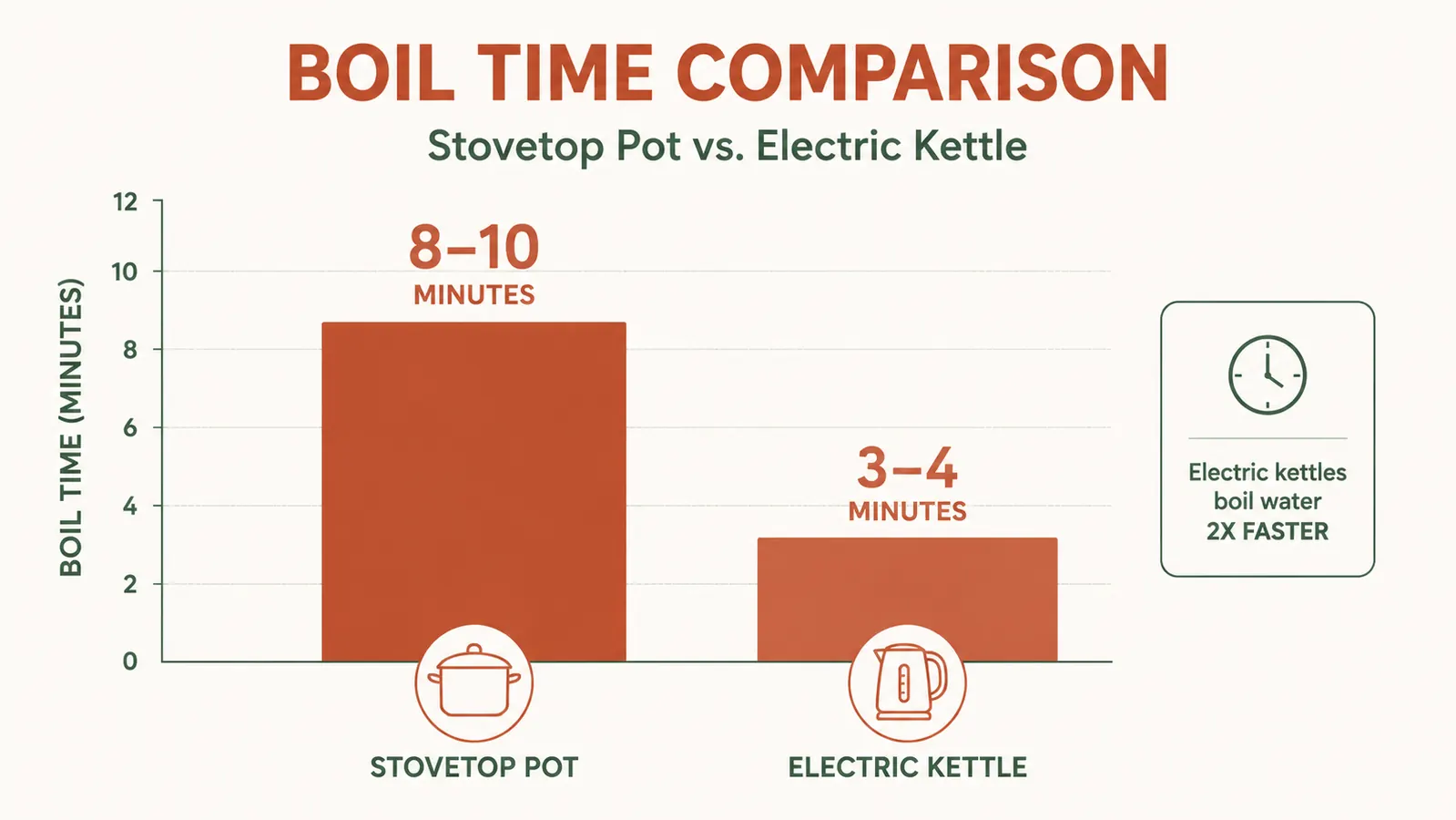
Set the kettle back on its base, press the single button on the handle, and walk away. That is the whole step. The Cosori 1500-watt element heats a full 1.7 liters to a rolling boil in about three and a half to four minutes. A stovetop pot over medium-high heat takes eight to ten minutes for the same amount of water. If you are boiling water twice a day, that is ten to twelve minutes you get back every single day. Over a month that is real time.
The auto shutoff triggers the moment the water reaches boiling. You will hear a click and the indicator light goes off. There is no whistle, no timer to set, no remembering to check it. I have started laundry, answered a phone call, and gotten the kids ready for school in the four minutes my kettle is running. When I come back, the water is ready. The Cosori also has boil-dry protection, meaning if you accidentally hit the button with an empty kettle, it detects no water and shuts itself off rather than burning out the element. That feature alone has saved me twice when I was moving too fast.
Three and a half minutes from cold tap water to a rolling boil. I have timed it more than once because it still surprises me every morning.

Step 4: Pour Slowly and Purposefully
How you pour matters more than you might think, especially for pour-over coffee or loose-leaf tea. The Cosori has a gooseneck-style pour spout that gives you real control over the flow rate. For tea, a gentle pour over the bag means the water extracts evenly and you do not blow the bag apart in the mug. For pour-over coffee, a slow controlled pour in circles over the grounds gives you a much better cup than dumping water in all at once. If you have been using a drip machine because you thought pour-over was too fussy, try it with an electric kettle first. The control is actually simple once you have the right tool.
For pasta or instant oatmeal, just pour directly into the pot or bowl. The kettle handle stays cool to the touch even right after a boil, which I appreciate when I am moving fast. The no-plastic-contact design means the only surfaces touching your water are stainless steel on the interior and the glass window on the side. No plastic smell, no plastic taste, even after months of daily use. For our family that detail matters because we do not love the idea of whatever off-gassing a cheap kettle might add to our water.
If you are using the kettle for instant oatmeal for multiple people, pour into each bowl separately rather than trying to carry a big pot of boiled water around the kitchen. The kettle is designed for precision, and pouring from it is safer and easier than transferring hot water to another container.

Step 5: Keep It Clean and Make It Last
A kettle that you actually clean regularly will perform better and taste better for years. Mineral deposits from tap water build up inside any kettle over time, especially if you have hard water. If you start to notice white or yellowish buildup on the interior walls or the heating element, it is time to descale. The process is easy: fill the kettle halfway with a mix of equal parts white vinegar and water, boil it, let it sit for twenty to thirty minutes, then discard the solution and rinse thoroughly. Run one plain water boil after that before using it again. I do this about once a month and the kettle performs exactly as it did on day one.
The wide mouth on the Cosori also makes it easy to wipe down the interior with a damp cloth if you want to spot-clean between descaling sessions. Never submerge the base or the exterior of the kettle in water. Wipe the outside with a damp cloth as needed. The matte black finish on the Cosori hides fingerprints reasonably well, which I appreciate in a kitchen where small hands touch everything.
Keep an eye on the lid seal and the spout filter screen over time. These do not wear out quickly, but if you notice the filter looking gunky or the lid not seating snugly, rinse them under running water. Replacing those small parts is usually not necessary for a couple of years with regular cleaning.
What Else Helps
An electric kettle works hardest when it becomes the default for everything that needs hot water in your kitchen, not just tea. Once I stopped treating it as a single-use gadget and started reaching for it whenever I needed hot water fast, it became one of the most-used things on my counter. Instant oatmeal in the morning, a cup of broth for a quick soup base at lunch, rehydrating dried mushrooms or couscous, softening a sticky jar lid, making hot chocolate for the kids on a cold night. Any task where you would otherwise heat water on the stove, the kettle is faster and safer.
If you want to go deeper on whether the Cosori is the right pick for your kitchen versus other options, I have a full eight-month review on this site that covers everything I noticed over sustained daily use, including the one thing I would change if I could. And if you are on the fence about whether an electric kettle is worth the counter space at all, I put together a list of ten real reasons it outperforms your stovetop that might settle the question quickly.
One more thing worth saying: the kettle costs less than two weeks of daily gas or electric burner use for the same amount of water heating, according to most estimates comparing 1500-watt electric elements against gas and electric cooktops at average utility rates. It is not a huge savings, but it is real, and over a year it adds up. The main value though is time and peace of mind. You cannot accidentally leave an electric kettle on. You can accidentally leave a burner on. For a busy household, that is worth something.
Four minutes to a boil, automatic shutoff, no plastic in contact with your water.
The Cosori 1.7L Electric Kettle is the small-kitchen upgrade that actually earns its counter space. Rated 4.5 stars by over 48,000 Amazon buyers. Check today's price before you boil another pot on the stove.
Amazon Check Today's Price on Amazon →