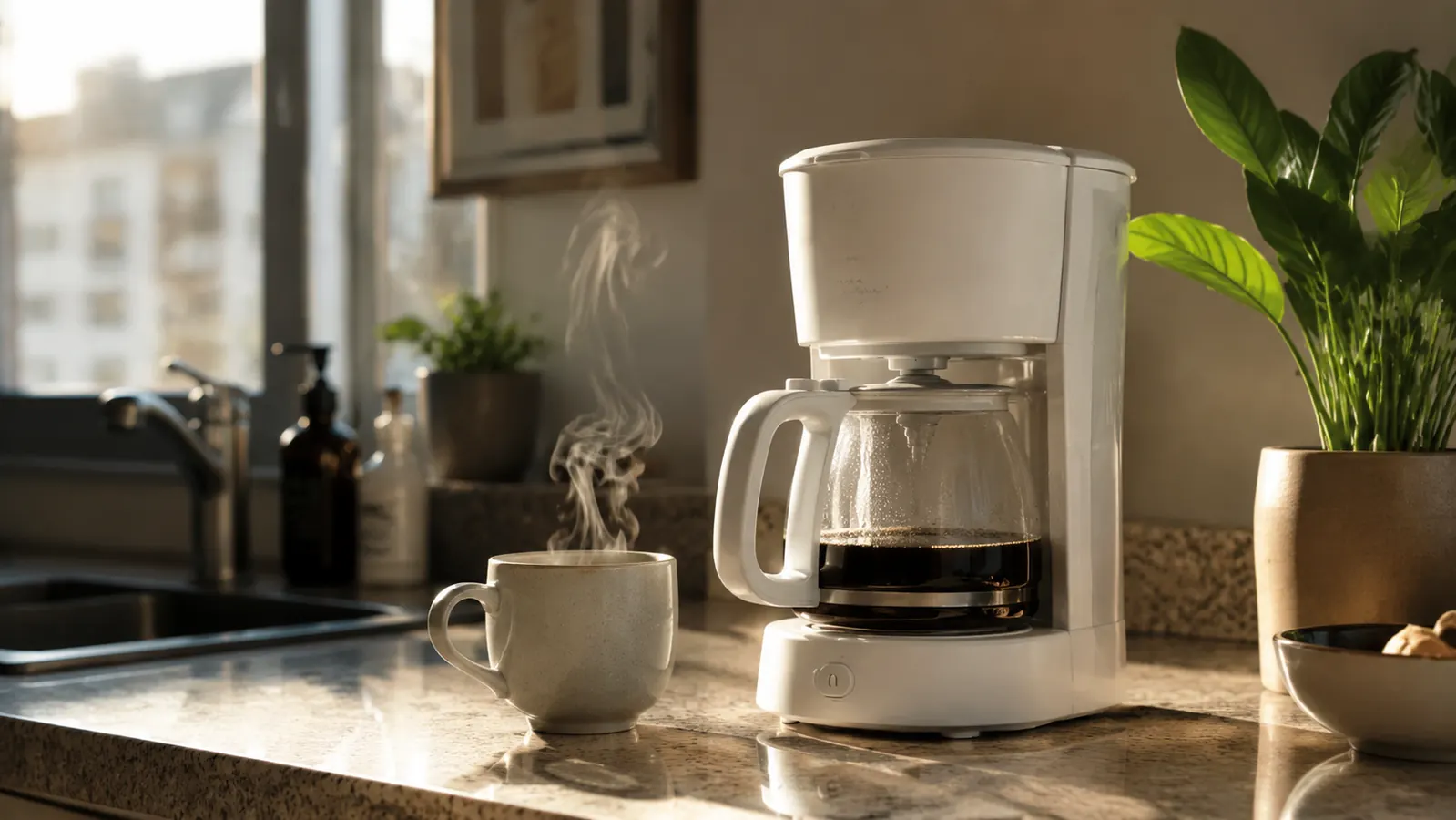
For a long time I thought bad home coffee was the machine's fault. I upgraded to a pod brewer, and the coffee still tasted flat. I tried a French press, and the cleanup at 6 AM with two teenagers asking for breakfast was enough to make me give up. Then I went back to basics: a compact five-cup drip machine, the Mr. Coffee 5-Cup Mini Brew, and a handful of habits that changed everything. The machine is budget-friendly. What actually changed my coffee was understanding how to use it right.
Most people blame their drip machine when the real problem is the approach. Wrong water temperature, too-fine or too-coarse a grind, a dirty carafe, or a water-to-coffee ratio that's just slightly off, any one of those will produce a cup that tastes dull, bitter, or watery. None of that is the machine's fault. This guide covers the five adjustments that make the biggest difference, in the order I'd make them if I were starting over.
If your morning coffee tastes like gas-station drip, the machine might not be the problem. But a fresh start with the right compact brewer helps.
The Mr. Coffee 5-Cup Mini Brew is what I use every morning. It takes about 6 minutes from cold water to full carafe, fits on any counter, and the reusable filter means you're not burning through paper every day. Check today's price on Amazon before you swap your whole routine.
Amazon Check Today's Price on Amazon →Step 1: Use Filtered Water, Not Tap
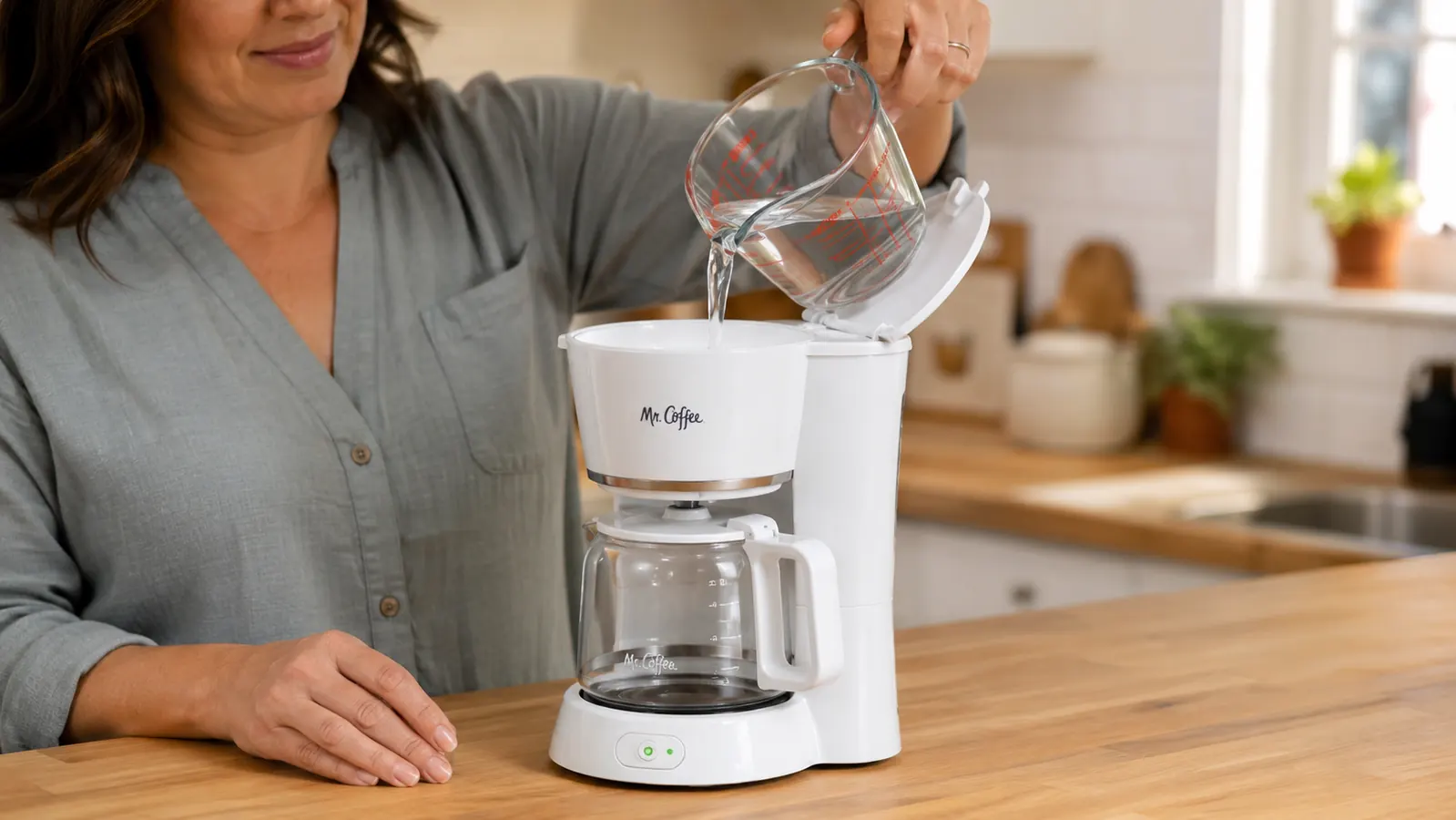
Coffee is about 98 percent water, so whatever is in your tap goes directly into your cup. Chlorine, mineral buildup, and even mild sulfur notes from municipal water sources come through clearly in a light or medium roast. I started running our tap water through a basic pitcher filter, the kind you keep in the fridge, and the difference was immediate. The coffee tasted cleaner and brighter without any other change.
You don't need anything fancy. A Brita or PUR pitcher filter does the job. If your tap water already tastes great, you can skip this step. But if you live in an older apartment building or a city with heavy chlorination, this single change will probably improve your coffee more than any other adjustment on this list. Fill your filter pitcher the night before so you're not waiting on it in the morning.
One thing to avoid: distilled or softened water. Those strip out the minerals that help coffee extraction. You want clean water, not mineral-free water. Filtered tap is the sweet spot.
Step 2: Nail the Coffee-to-Water Ratio
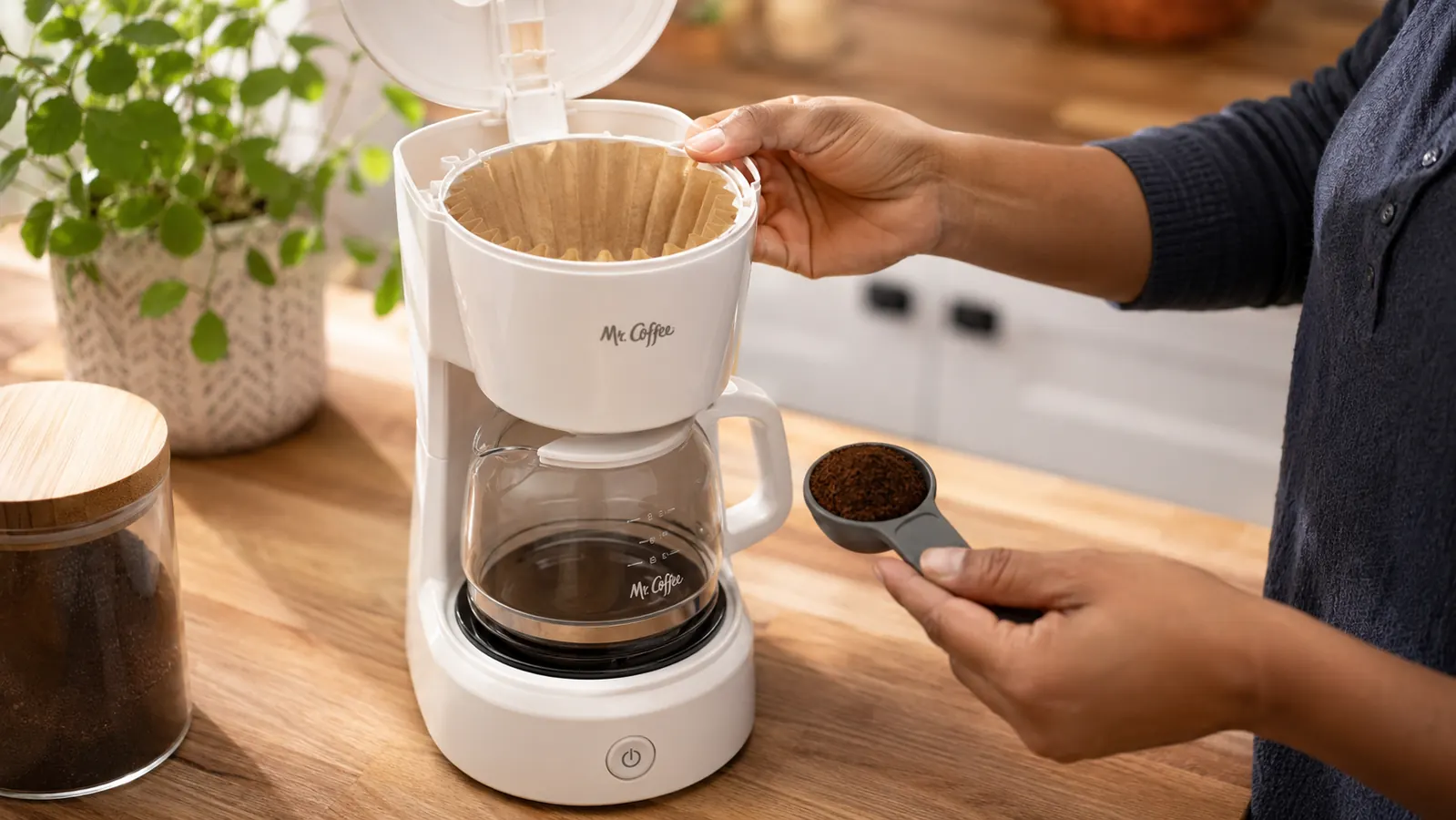
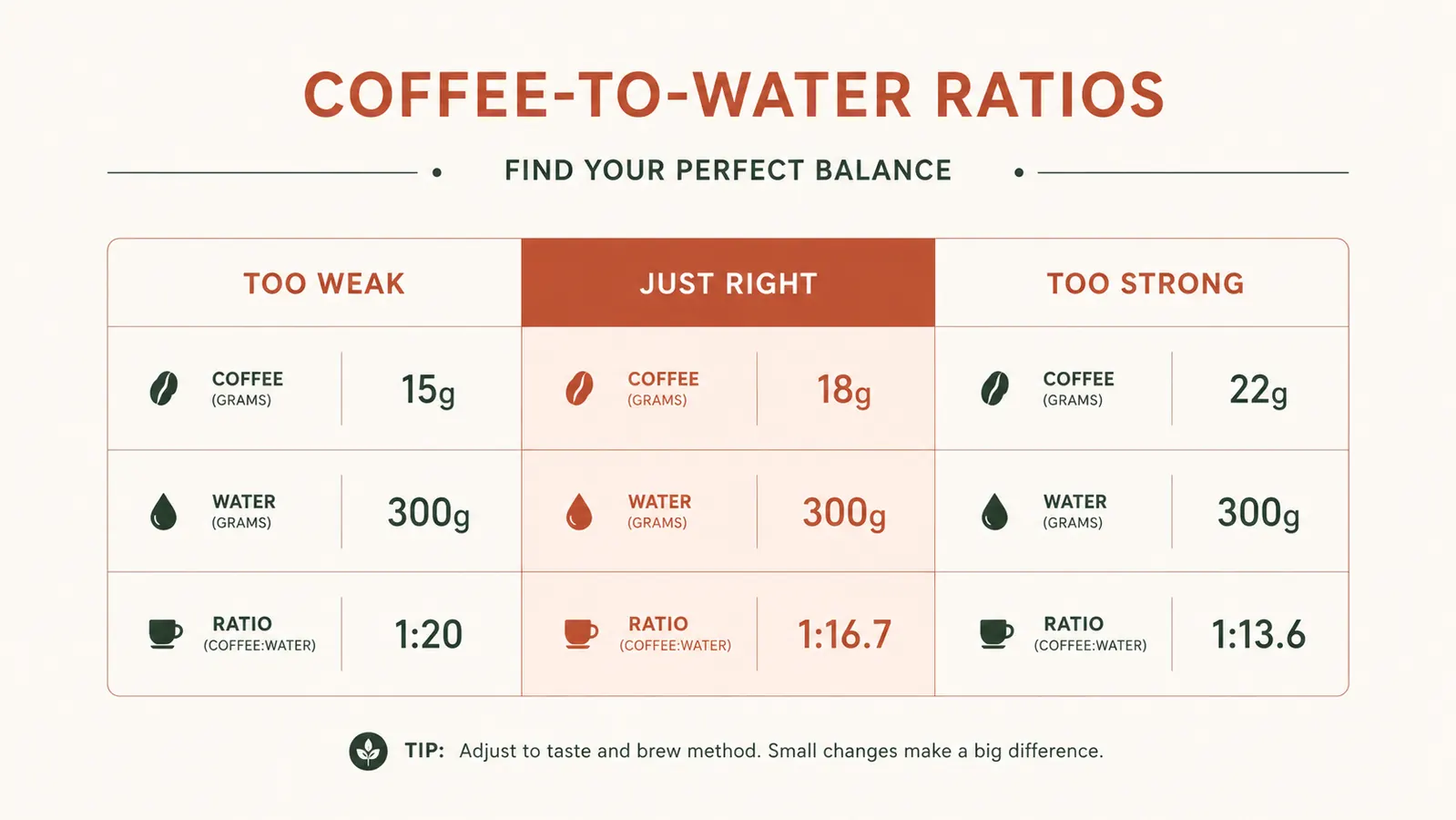
The standard recommendation is two tablespoons of ground coffee per six ounces of water. That sounds precise, but most people eyeball it and end up either under-extracting (weak, watery coffee) or over-extracting (bitter, harsh coffee). For the Mr. Coffee 5-Cup Mini, I use a flat two tablespoons per cup marker on the carafe. If you're making a full five-cup pot, that's ten level tablespoons of ground coffee.
If you like stronger coffee, bump it to two and a half tablespoons per cup, but don't go past three. Beyond that, you're not getting stronger flavor, you're getting bitterness. The goal is full extraction of the good compounds before the bitter ones come through. Getting your ratio right is the single cheapest upgrade you can make, because it costs nothing and takes ten seconds.
Keep a measuring spoon near the machine. I taped a cheap set of measuring spoons to the inside of the cabinet above the coffee maker. It sounds fussy, but once it's a habit, you won't think about it.
Step 3: Choose the Right Grind
Drip coffee makers are designed for a medium grind, similar in texture to coarse sand. Fine grinds, the kind made for espresso, will over-extract and produce a bitter cup. Coarse grinds, meant for French press, will under-extract and taste thin. If you're buying pre-ground coffee from a grocery store, look for labels that say 'drip' or 'auto drip' and you're in the right zone.
If you're grinding your own beans, set your grinder to medium. Most burr grinders label this clearly. Most blade grinders are less predictable, but 8 to 10 seconds of pulsing (not continuous grinding) gets you close. Pre-ground coffee is completely fine for a daily drip machine. The grind upgrade matters most if you're comparing mediocre pre-ground to fresh whole-bean coffee you grind at home.
Fresh coffee matters more than grind method. If you've had that bag of pre-ground sitting open on the shelf for six weeks, it's stale and no amount of ratio tweaking will fix it. Store ground coffee in an airtight container away from heat and light, and buy in smaller quantities so you finish the bag within two to three weeks.
Drip coffee gets blamed for bad taste that is almost always caused by stale beans, wrong ratios, or mineral-heavy tap water. Fix those three things first before you blame the machine.
Step 4: Prep the Filter and Basket Correctly
The Mr. Coffee 5-Cup Mini comes with a reusable mesh filter, which is one of the things I like most about it. No ongoing cost for paper filters, and you're not adding paper flavor to the coffee. That said, the reusable filter needs to be rinsed after every use and cleaned properly every few days. Coffee oils build up fast, and those oils go rancid and make fresh coffee taste stale.
If you prefer paper filters for a cleaner cup (paper removes more of the oils, which some people prefer), use a cone-style No. 4 filter and rinse it with hot water before adding coffee grounds. This rinse washes away the papery taste and pre-warms the basket, which helps maintain brew temperature. It takes fifteen seconds and it makes a real difference in the final cup.
Don't overfill the filter. If you're using a paper filter and you pack it past the two-thirds line with grounds, water can't flow through evenly. You'll get uneven extraction where part of the bed is over-extracted and part is barely touched. Level the grounds flat with a spoon before brewing.
Step 5: Clean the Machine Every Week
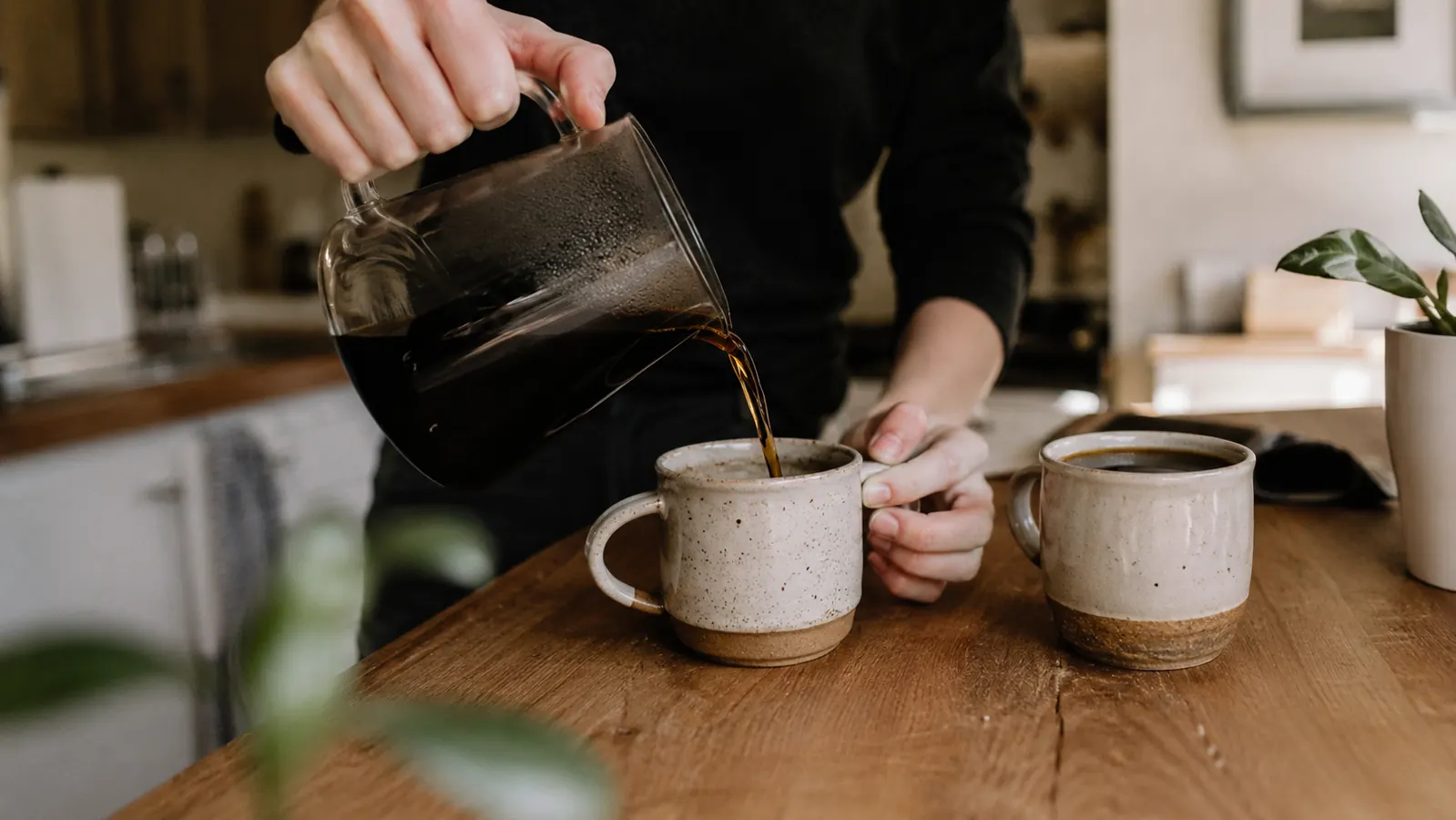
This is the step most people skip, and it's why coffee that tasted great the first week starts tasting off by month two. Mineral deposits, called scale, build up inside the water reservoir and heating element over time. They lower the brew temperature, slow the flow, and add a mineral flatness to the taste. Descaling once a month if you have hard water, or every six to eight weeks otherwise, fixes all of that.
The simplest descaling method: fill the reservoir with half white vinegar and half water, run a full brew cycle without coffee, then run two full cycles with plain water to rinse. Total time is about twenty minutes of actual work, most of which is just waiting. I do it on Sunday mornings while I'm making breakfast. The carafe and filter basket should go in the dishwasher or get a soak in hot soapy water at the same time.
Beyond descaling, rinse the carafe after every use and don't let brewed coffee sit in it for more than an hour. The warming plate continues to cook the coffee after brewing, concentrating the bitter compounds and burning off the aromatics. If you're not going to drink the second cup within the hour, transfer leftovers to a thermos or covered travel mug.
What Else Helps
The five steps above will produce the biggest improvements, but a few smaller habits round it out. Brewing at the right water temperature matters, and most compact drip machines brew somewhere between 195 and 205 degrees Fahrenheit. The Mr. Coffee 5-Cup Mini sits in that range, which is why I trust it. Pod machines often brew at lower temperatures to speed up the cycle, which is one reason pod coffee can taste flat compared to well-dialed-in drip.
If you use an electric kettle to boil water for other drinks, pairing it with your drip routine helps in a different way: it speeds up morning prep. Boil water for oatmeal or tea in the kettle while the coffee brews, instead of juggling both on the stovetop. Our guide to choosing a compact electric kettle covers what to look for if you want to add one to a small kitchen setup. See our review of the Cosori Electric Kettle for a solid option that fits on the same counter footprint.
If you're still deciding between the Mr. Coffee and a similarly priced BLACK+DECKER five-cup brewer, our Mr. Coffee vs BLACK+DECKER comparison breaks down where each one wins. And if you want the full long-term verdict on the Mr. Coffee 5-Cup Mini before you buy, our six-month review covers what held up and what I'd change.
One more thing: buy a bag of coffee from a local roaster or a specialty grocery brand instead of the cheapest can on the shelf. You don't need expensive single-origin beans, but coffee that was roasted and packaged within the past few months brews noticeably better than the canned commodity blends that may have been sitting in a warehouse for a year. The price difference for a two-week supply is usually three to five dollars. That's the best per-cup improvement you can make after the five steps above.
Your coffee habit shouldn't cost you six dollars a day at a shop. The Mr. Coffee 5-Cup Mini makes a full carafe for pennies a cup, and the techniques above make it taste like it's worth every penny.
With over 32,000 reviews and a 4.4-star rating, the Mr. Coffee 5-Cup Mini Brew is one of the most reliable compact drip machines on Amazon. It's what I use every single morning. Check today's price and see if it's the right fit for your counter.
Amazon Check Today's Price on Amazon →