
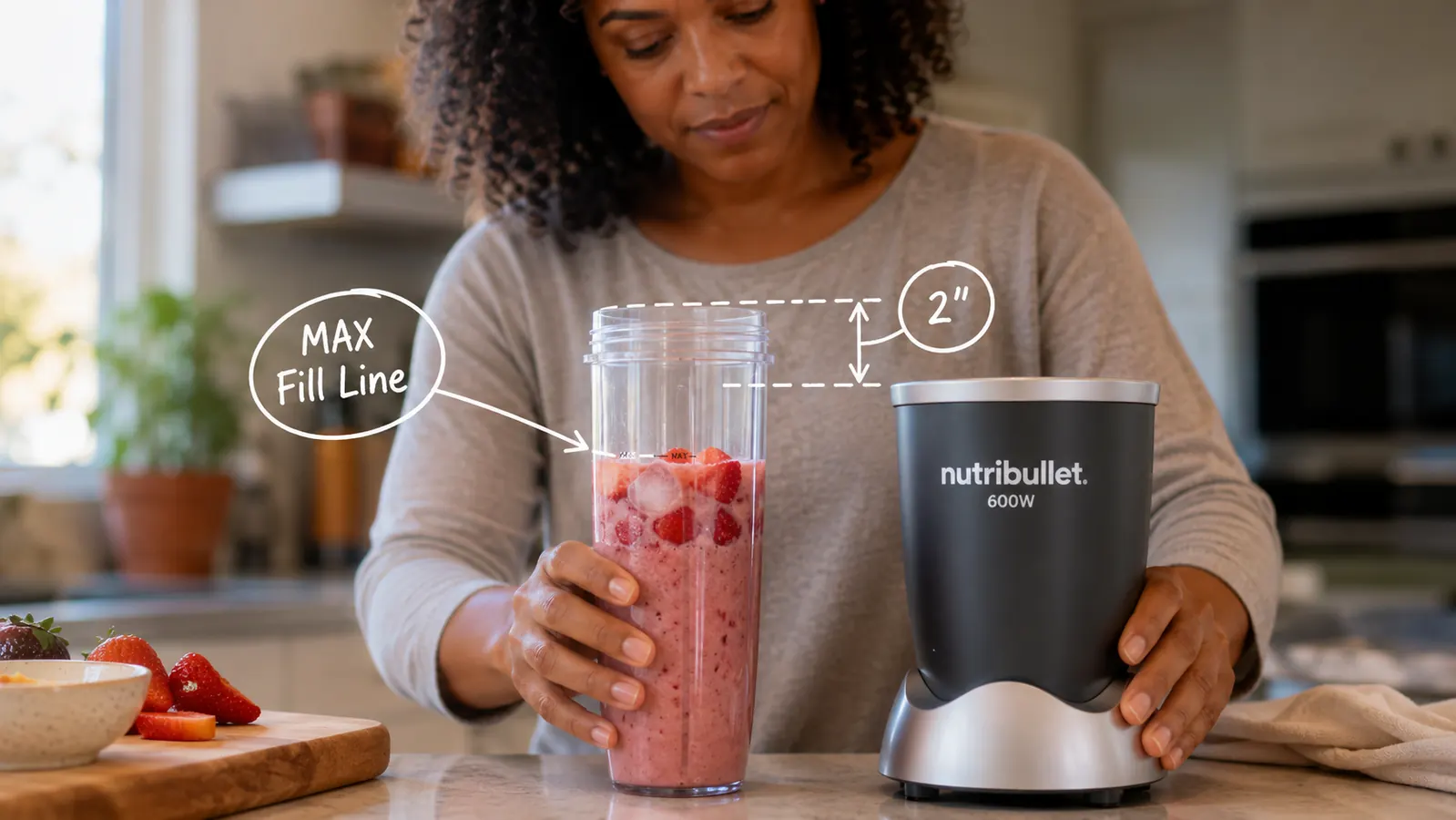
Here is what the NutriBullet listing will not tell you: if you fill the cup past the MAX line and lock the blade assembly on, the pressure from blending will push liquid up around the gasket and drip down the side of the base. Not a flood. Not a disaster. Just enough to leave a wet ring on your counter every single morning until you figure out what is happening. I learned this after three days of wondering why my counter kept getting sticky. The MAX line is marked. I ignored it because the cup looked barely half full. That was my mistake, but it is also a mistake that probably 30 percent of new owners make, and nobody talks about it. That is the kind of detail this review covers. The NutriBullet 600W Personal Blender, ASIN B07CTBHQZK, has over 49,000 Amazon reviews and a 4.6-star rating. There is a real product behind that number. But there is also a gap between what the marketing says and what daily life with this blender actually looks like.
The Quick Verdict
A genuinely capable personal blender that earns its price over budget alternatives, but only if you go in with accurate expectations. The motor and cup size justify the cost for anyone blending frozen produce daily. The quirks are real, learnable, and not dealbreakers. Just know them before you buy.
Amazon Check Today's Price →Still paying for cafe smoothies because your last blender was too annoying to use? This is the one that actually stays on the counter.
The NutriBullet 600W has 49,000-plus Amazon ratings for a reason. Check today's price and see if it is currently on sale before reading the rest of this review.
Amazon Check Today's Price on Amazon →How I Tested It Against Budget Options
I run a small food prep operation in a one-bedroom apartment kitchen. My partner and I both work from home, we try to eat reasonably well on a tight grocery budget, and I meal prep on Sundays. I wanted a personal blender for daily protein shakes and the occasional sauce or pureed soup portion. I bought the NutriBullet 600W and tested it side by side with two budget alternatives, a store-brand personal blender in the budget range and the Magic Bullet, which is made by the same parent company as NutriBullet and costs considerably less. I tested all three on the same four blends: a frozen berry and spinach smoothie, a peanut butter and banana shake with ice, a single-serve salsa with raw tomatoes and onion, and a protein powder shake with almond milk. I ran each blend three times on each machine and noted the texture, the time, the noise, and the cleanup effort.
I also watched what happened over three weeks of daily use. Did anything wear? Did the seal hold? Did the motor sound different at week three than it did on day one? That is the kind of testing that star ratings do not always capture because people leave reviews after the first week when everything is still new and exciting.
The Four Things Nobody Mentions in the Reviews
First: the MAX fill line is not a suggestion. It is load-bearing. The 24-ounce cup holds 24 ounces, but the blade assembly takes up about two inches of that space from the top when you flip it and lock it on. The actual blendable volume is closer to 18 to 20 ounces depending on your ingredients. Fill it past the MAX line and you will get leaks around the gasket during blending. Not every time, not a lot, but enough to matter. The fix is to watch the line and leave a meaningful buffer, especially with thin liquids.
Second: leafy greens create foam. A lot of it. Spinach and kale, when blended at high speed, trap air and produce a thick green foam on top of your smoothie. It tastes fine and settles after about two minutes, but if you are blending and immediately drinking on your way out the door, the first few sips are mostly foam. The fix is to blend your liquid and greens first for about 15 seconds before adding the fruit and protein powder. That step changes the texture meaningfully.
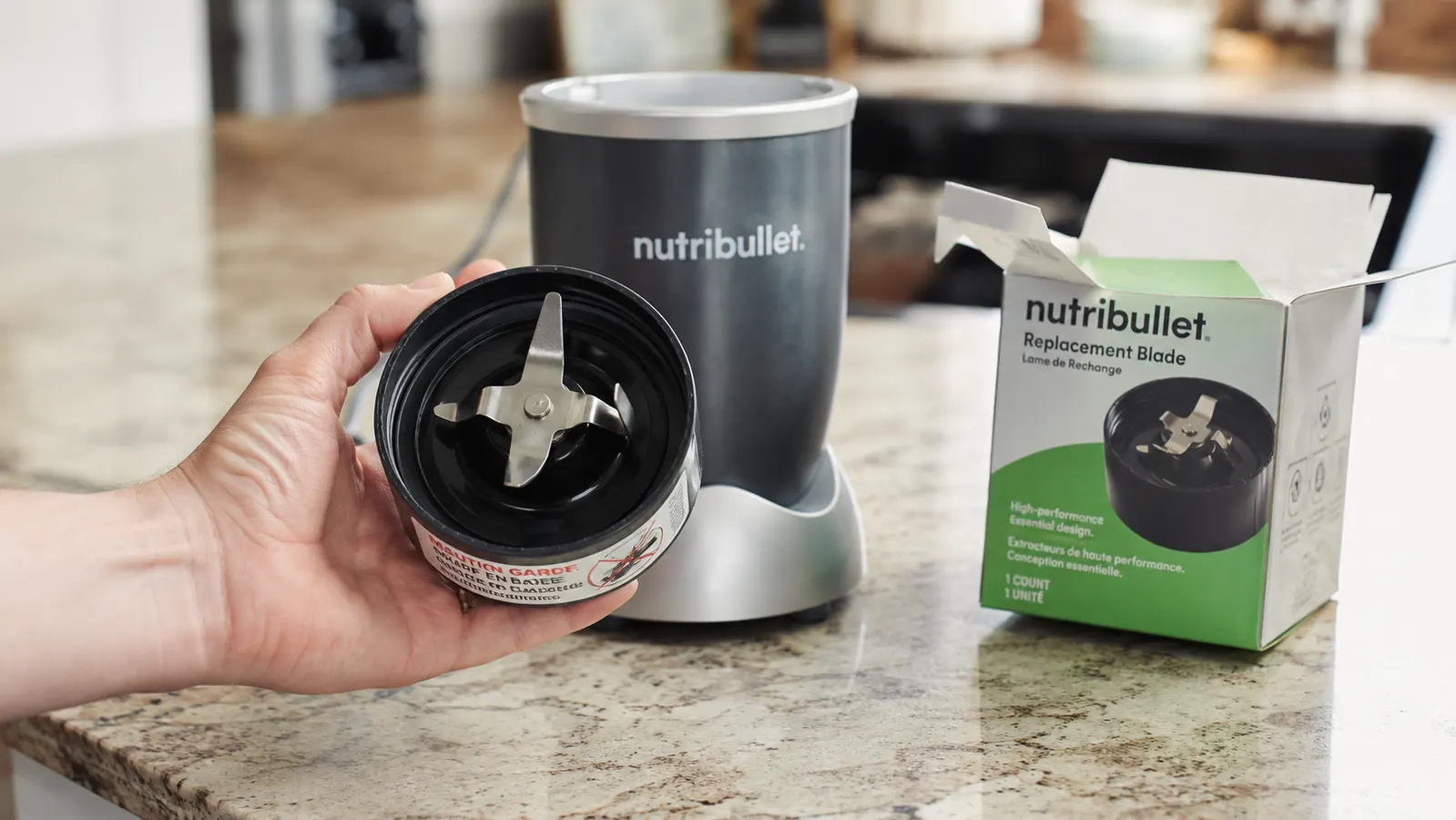
Third: the blade dulls and you will not notice until the quality of your blends drops. There is no indicator. Blends just start taking longer and the texture gets slightly grainier over time. In my testing, by about six weeks of daily use, the budget store-brand blender had noticeably dulled. The NutriBullet blade held up better through the three-week test period, but replacement blades are available on Amazon and are worth buying one spare so you are not caught waiting for shipping when you finally notice the difference.
Fourth: the power rating is technically correct but practically misleading. The box says 600W. That is the motor input wattage. The actual mechanical output to the blades is lower because of energy lost to heat and motor efficiency. This is not unique to NutriBullet, every blender does this, but it matters when you are comparing specs across brands on Amazon and wondering why a 700W blender from a brand you have never heard of is cheaper. The NutriBullet's blade design and cup shape are part of why it outperforms some higher-wattage budget blenders. Wattage alone does not tell the full story.
Head-to-Head: NutriBullet 600W vs Budget Alternatives
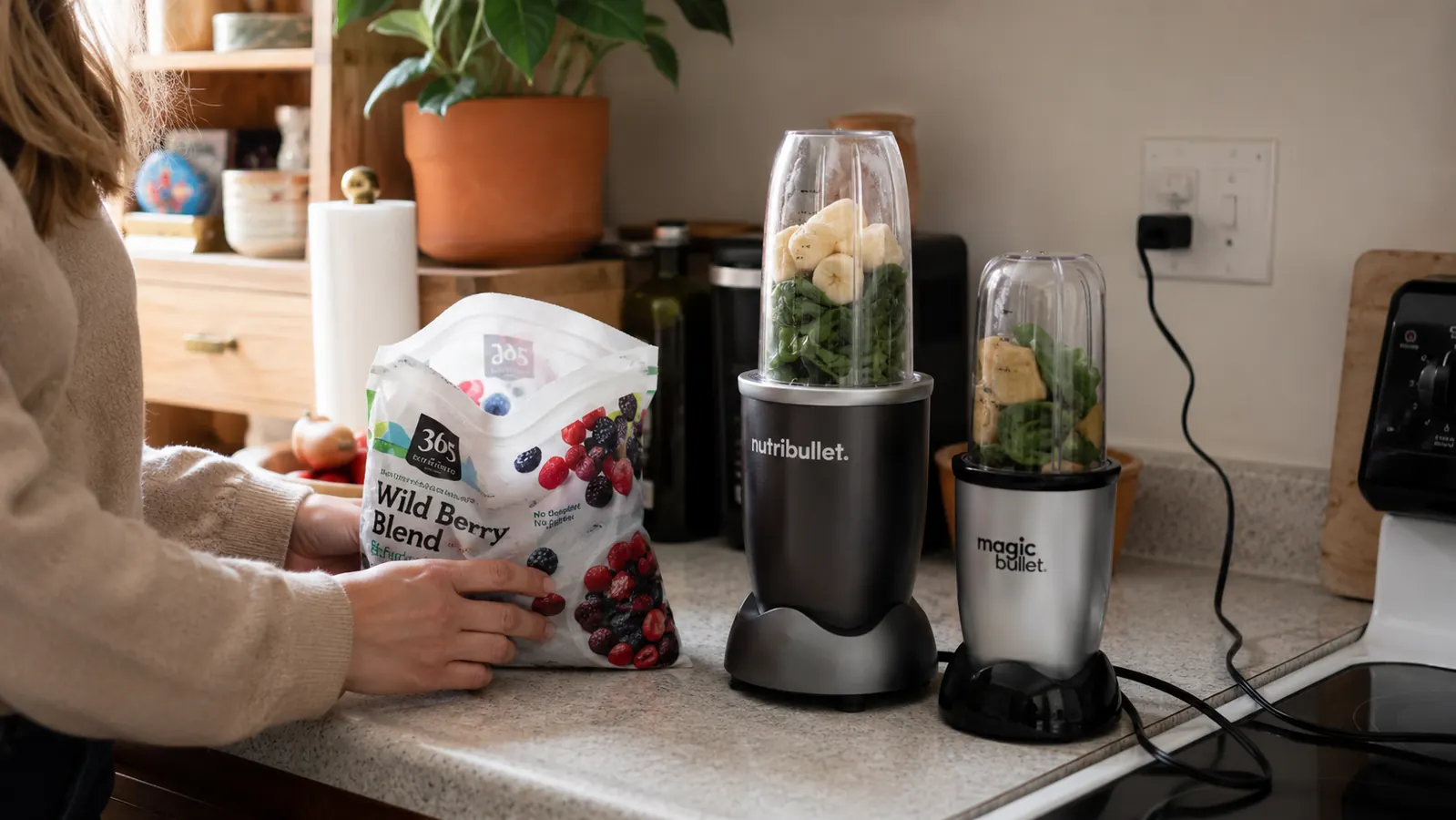
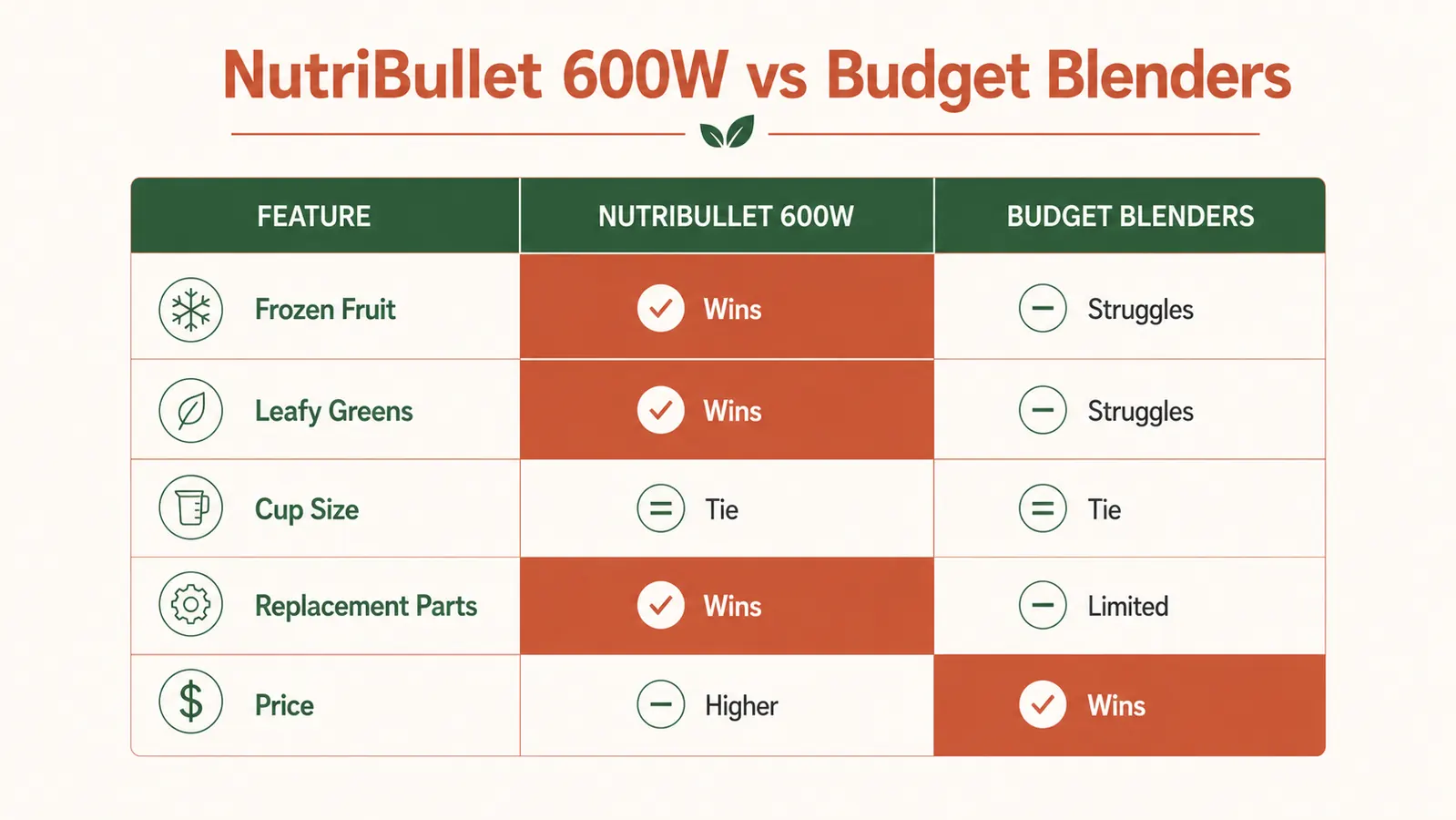
On the frozen berry and spinach blend, the NutriBullet finished in about 35 seconds with a smooth, drinkable texture. The Magic Bullet took closer to 50 seconds and left small spinach bits in the blend. The store-brand blender needed two separate 30-second runs and still had visible fruit skin pieces. For leafy green smoothies, the NutriBullet is the clear winner between these three options.
On the peanut butter and ice shake, all three handled it, but the NutriBullet was the only one that fully incorporated the peanut butter without leaving a coat of it stuck around the blade hub. The Magic Bullet and the store-brand both required stopping, shaking, and blending again. Not a dealbreaker, just annoying at 7 AM.
On the salsa, all three performed similarly. Raw tomatoes and onion are soft enough that even a weak blade handles them fine. If salsa or dips are your primary use case, you do not need to spend NutriBullet money. A cheaper option works just as well for soft produce and liquids. On the protein powder shake, again, all three were comparable. Powder in liquid is an easy blend for any motor. If your smoothies are powder-based and you skip frozen produce, the price difference may not be worth it for you.
The Parts Question Nobody Asks Until Something Breaks
This is where the NutriBullet actually earns a real advantage over budget alternatives. When the blade dulls, or when the gasket eventually wears and starts leaking, you can buy individual replacement parts. NutriBullet sells replacement blade assemblies, cups, and lids as separate products on Amazon. The motor base does not become trash when one component wears out.
The store-brand blender I tested against has no replacement parts available for purchase. When the blade goes, you buy a new blender. The Magic Bullet has some replacement parts available but the availability is inconsistent and the cup sizes are smaller, so you are locked into the smaller cup format. The NutriBullet ecosystem is the most replaceable-parts-friendly of the three, and for a household trying to get the most life out of appliances, that matters. A replacement blade assembly is a fraction of the cost of a new unit.
When the blade dulls on a budget blender, you buy a new blender. When it dulls on the NutriBullet, you buy a replacement blade. That difference is worth real money over two or three years of daily use.
What the Marketing Gets Right and What It Glosses Over
The marketing emphasizes extraction power, the idea that cyclonic blending breaks down cell walls to release more nutrients. That is a real effect, not a made-up claim, though the practical nutritional difference in everyday smoothies is modest. What the marketing does not emphasize: this blender is loud, the cup size is genuinely limiting if you want to make two full servings at once, and the flip-and-press activation means there is no hands-free operation. You hold the cup down against the base the entire time it is running. That is 30 to 45 seconds of standing there. For most people that is fine. If you have wrist or hand strength limitations, that is worth knowing before you buy.
The marketing also does not talk much about what happens if you put hot liquids in the cup. Do not put hot liquids in the cup. Pressure builds up and the lid can come off. This is true of almost every personal blender and it is mentioned in the manual, but the manual is the last thing anyone reads. If you want to blend warm soups, let the soup cool to room temperature first, or use a countertop blender with a proper vented lid for hot liquids.
Is the Price Difference Worth It Over the Magic Bullet?
This is the question most people have when they look at the two side by side. The Magic Bullet is made by the same company, looks similar, and costs quite a bit less. For light use, mostly soft fruit, yogurt, and powder-based shakes without frozen ingredients, the Magic Bullet is a reasonable choice and the price difference is hard to justify.
The price difference earns itself when you are regularly blending frozen produce and leafy greens. The NutriBullet's larger cup and more powerful motor handle those ingredients noticeably better, and the texture difference in the finished smoothie is real. You can read the full side-by-side breakdown in our NutriBullet vs Magic Bullet comparison if you are deciding between the two. The short answer: if your blends are heavy on frozen fruit and greens, the NutriBullet is the better tool. If your blends are lighter, save the money.
What I Liked
- Motor outperforms budget alternatives on frozen produce and leafy greens in real testing
- Replacement blade assemblies and cups available separately, so the motor base is not disposable
- Cup doubles as a travel cup with the included lid, one less dish to carry
- Compact footprint comparable to budget options, no extra counter space penalty for going with the better blender
- 49,000-plus Amazon reviews at 4.6 stars signals consistent real-world reliability across a large sample
Where It Falls Short
- The MAX fill line is not clearly marked enough and leaks will happen until you internalize the limit
- Leafy greens create significant foam, requires a two-step blend technique to get a clean texture
- Loud during operation, not suitable for early mornings in thin-walled apartments without waking others
- No hands-free operation, you hold the cup against the base the entire blend time
- Price premium over budget options is only justified if you blend frozen produce and greens regularly
Who This Is For
The NutriBullet 600W is the right buy for one or two people who blend most mornings, regularly use frozen fruit or leafy greens, and want a blender that will last more than a year without the blade giving out. It is also the right buy if you value the ability to replace parts rather than replacing the whole unit when something wears. If you are unsure whether you will even use a personal blender regularly, or if your blends are mostly soft ingredients and powder, start with something cheaper and upgrade if you find yourself hitting its limits. The reasons a personal blender belongs in a small kitchen are worth thinking through before any purchase, and our 10 reasons a personal blender beats a full-size blender article covers that decision clearly.
Who Should Skip It
Skip the NutriBullet 600W if you are making smoothies for three or more people regularly. The 24-ounce cup means multiple back-to-back blends, and a mid-size countertop blender is a better fit for that volume. Skip it if you have wrist or hand limitations that make 30 to 45 seconds of continuous pressing uncomfortable. Skip it if most of your blends are soft fruit, yogurt, and powder, where a cheaper option performs comparably. And skip it if noise before 7 AM is a genuine household constraint, because this blender will carry through a wall. Our full guide at NutriBullet Personal Blender Review: A Year of Daily Smoothies covers the longer-term durability picture if that is your main concern.
Knowing what the marketing skips is half the battle. The other half is getting the right blender at the right price.
The NutriBullet 600W Personal Blender is available on Amazon, usually with free shipping. Check today's price and availability below. Prices shift, and it sometimes goes on sale without warning.
Amazon Check Today's Price on Amazon →