

I want to be upfront with you about something. When I first picked up the Dash Tasti-Crisp 2.6-quart air fryer, I was skeptical in a way that felt almost unfair. A budget air fryer, from a brand I vaguely recognized from infomercials, in a size that looked like it could barely cook a snack. I bought it specifically to find out what the 34,000-plus Amazon reviewers actually saw in it, and to figure out whether the tradeoffs were ones a real family could live with. What I found was more interesting than a simple thumbs-up or thumbs-down.
Here is the thing about budget appliances in a small kitchen: the question is never just 'does it work?' The question is whether it works well enough, for the specific jobs you need it to do, given the counter space you are giving up and the money you are spending. The Dash passes that test in some ways and fails it in others. This review covers both, honestly.
The Quick Verdict
A genuinely capable budget air fryer for singles and couples, but the 2.6-quart basket is a real constraint for families and the manual temperature dial takes some trial runs to trust.
Amazon Check Today's Price →Your oven takes 15 minutes to preheat. The Dash takes zero.
If you are cooking for one or two people and tired of turning on a full oven for small meals, the Dash Tasti-Crisp is worth a serious look. Check the current price and availability on Amazon before you decide.
Amazon Check Today's Price on Amazon →How I Actually Tested This Thing
I did not just run a few batches of frozen fries and call it a review. I cooked with the Dash for three weeks in a kitchen with about 14 linear feet of counter space total, which is generous for an apartment but still tight once you factor in a coffee maker, a toaster, and the cutting board that basically lives on the counter. I tracked what I cooked, how it came out, and whether I hit the same issues that kept showing up in the negative reviews.
The test foods: frozen chicken tenders, fresh chicken thighs (skin-on, boneless), frozen french fries, sliced zucchini, leftover pizza, salmon fillets, and brussels sprouts. I also ran a batch of fresh cut sweet potato fries, because if an air fryer cannot handle those, I consider it a dealbreaker. I compared results against my conventional oven and against a Ninja 4-quart air fryer I borrowed from a neighbor for direct comparison.
I also paid attention to the things reviewers tend to gloss over: how loud it actually is, whether the dial is easy to read at a glance, how long cleanup realistically takes, and what happens the first time you forget about a cook and come back two minutes late. These details matter more day-to-day than any spec on the box.
Three weeks in, here is what I learned that you will not find in the manufacturer specs.
What Actually Surprised Me (in a Good Way)
The first surprise was the preheat situation, or rather the lack of one. My oven needs 12 to 15 minutes to hit 400 degrees. The Dash is ready in under two minutes. For weeknight cooking when you are standing in the kitchen at 6:30 pm figuring out dinner while someone is asking you about homework, that time difference is not trivial. It changes whether you actually cook or just grab something easier.
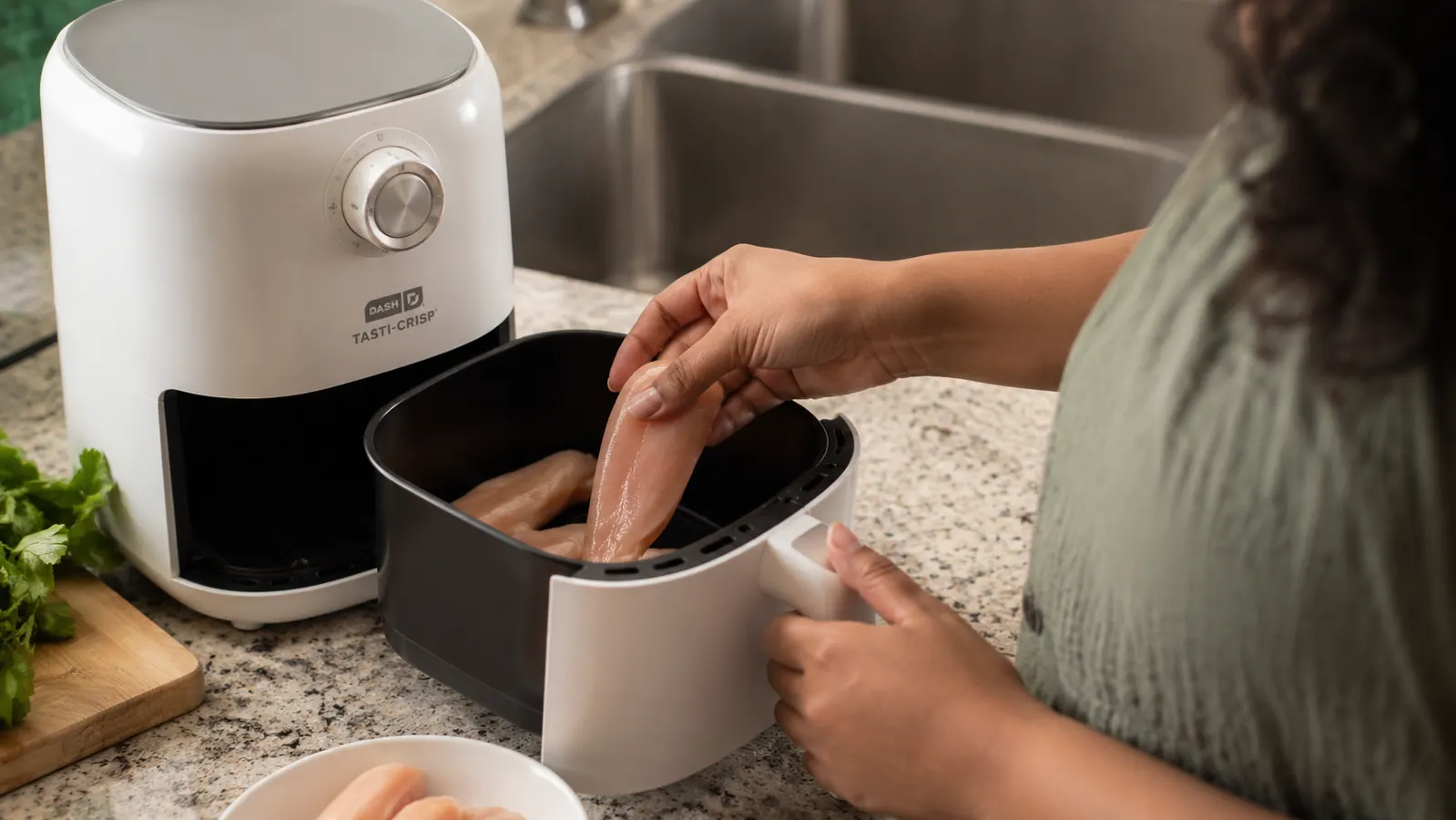
The second surprise was how good the results were on certain foods. Frozen chicken tenders came out with a texture I honestly did not expect. The breading crisped up the way it does in a restaurant fryer, not the soft pale way they come out of an oven. I cooked them at 390 degrees for 10 minutes, flipped once at 5 minutes, and they were done. Consistent. No hot spots I could detect. Fresh cut sweet potato fries at 380 degrees for 14 minutes, tossed with a little oil, came out better than I get them in my oven at higher heat for longer.
The 2.6-quart basket is genuinely small, but for the right serving size, the airflow works in your favor. A smaller batch means hotter air circulates closer to every surface. You get more even crisping than you would in a larger unit where food can shield itself from the fan.
Frozen chicken tenders came out with a texture I honestly did not expect. The breading crisped up the way it does in a restaurant fryer, not the soft pale way they come out of an oven.
The Honest Problems Nobody Puts in the Headline
Okay, here is where we need to talk about what the marketing materials skip. The Dash has a manual temperature dial and a manual timer dial. No digital display. No preset buttons. No built-in shake reminder. That sounds minor until you realize that the dial markings are small, the pointer is not super precise, and you are essentially guessing at 350 versus 375 degrees. The difference matters more for delicate foods like fish than for forgiving foods like fries, but it does mean your first few cooks are going to be calibration runs.
The timer also does not turn the unit off completely when it goes off. It cuts the heating element but the fan keeps running for a moment. Not a safety issue, but it confused me the first time. The beep when the timer hits zero is one short tone, easy to miss if you are in another room. If you have a large apartment and a habit of starting a cook and walking away, set a separate phone timer.
Cleanup is fine but not as fast as some reviewers suggest. The basket and the crisper tray are both nonstick and dishwasher safe, which is legitimately convenient. But the crisper tray has small holes that trap fine food particles, and if you do not soak it after a particularly greasy cook, you will be scrubbing. Not a dealbreaker, but worth knowing before you picture yourself just rinsing it under water and being done.
And then there is the capacity reality. The 2.6-quart basket sounds bigger than it is. In practice, you are cooking for one generous serving or two modest ones. When I tried to do chicken thighs for two people, I could fit three thighs if I placed them very carefully, and even then the edges of the outside pieces browned faster than the centers. For a family of four, you are doing this in batches, which partially defeats the speed advantage.
How It Stacks Up Against Pricier Models
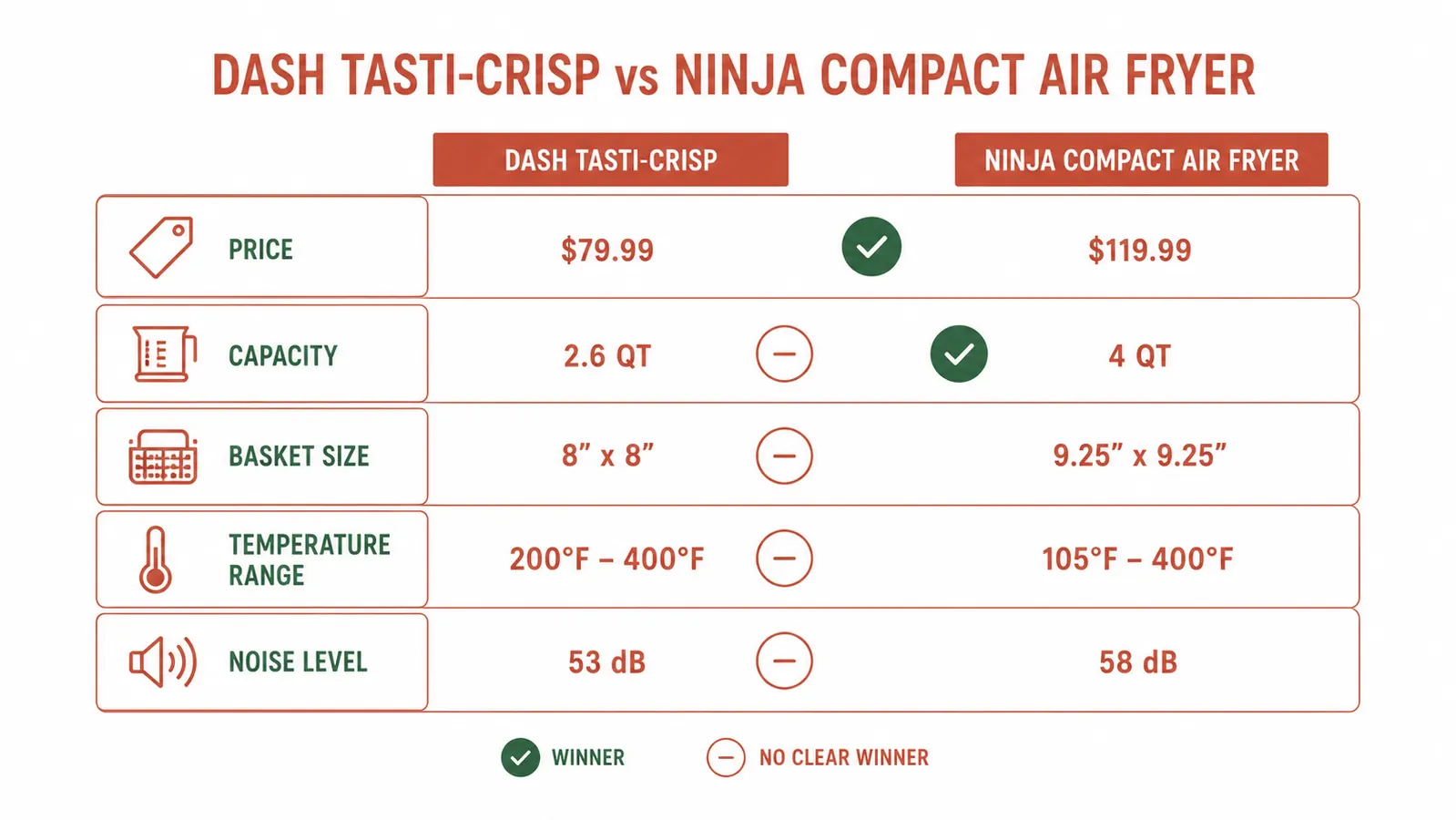
I want to be specific here because vague comparisons do not help you decide anything. Against the Ninja 4-quart that I borrowed for testing, the Dash held its own on cooking quality for small batches. Side-by-side, a single serving of frozen fries came out very similar in texture and color. Where the Ninja clearly won: capacity (nearly twice the basket volume), a digital display that lets you set temperature with confidence, and a basket with a wider surface area that meant food spread out more evenly in larger portions.
The Ninja also costs significantly more. Whether that cost difference is worth it depends entirely on how many people you are feeding. For one or two people, the Dash cooks comparably. For a family, the Ninja's extra capacity is not a luxury, it is a practical necessity. If you are trying to figure out which one is right for your situation, there is a more detailed head-to-head breakdown in our Dash vs Ninja comparison.
One more honest note: the Dash runs a bit louder than I expected for its size. Not disruptive in a normal kitchen, but if you live in a studio apartment and your kitchen is three feet from your bedroom, you will notice it during a 12-minute cook.
The Foods It Does Well and the Foods It Struggles With
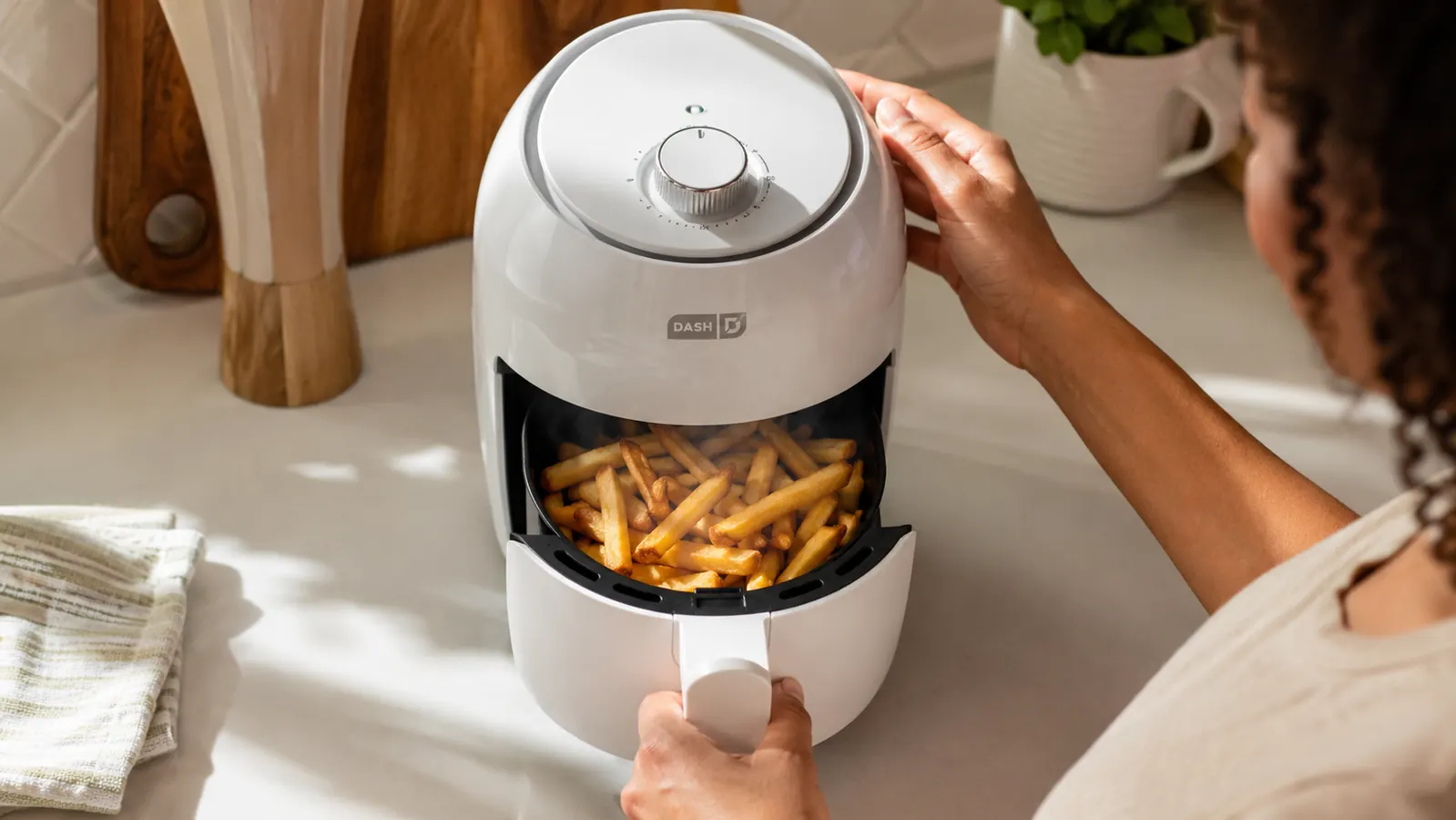
Excellent results: frozen breaded items of all kinds (tenders, nuggets, fish sticks), fresh cut fries and wedges with a light oil toss, roasted vegetables (broccoli, brussels sprouts, zucchini), and reheating leftovers, particularly pizza and fried foods that get soggy in a microwave. That reheating ability alone converted me from skeptic to regular user. Day-old pizza in the Dash at 325 degrees for four minutes tastes fresh out of the oven. No microwave can do that.
Struggles: bone-in chicken pieces that need more than about 25 minutes of cook time (the basket is tight and you get uneven browning on larger cuts), anything that requires more than a single layer of food, and delicate proteins like fish that need a precise temperature and are easy to overcook with an imprecise dial. Salmon worked, but I had to watch it and check it at multiple points. Not the hands-off experience I wanted.
If air frying is new to you and you want a deeper look at specific techniques that work in a compact unit, we have a full walkthrough at How to Get Crispy Results Without a Full Oven.
What I Liked
- Zero-preheat cooking is genuinely faster than an oven for small portions
- Produces restaurant-quality crunch on frozen breaded foods
- Compact footprint fits on crowded apartment counters
- Transforms leftover pizza and fried food better than any microwave
- Nonstick basket and tray are dishwasher safe
- Auto shutoff feature adds peace of mind for distracted cooks
- Price point removes the risk of a big appliance commitment
Where It Falls Short
- 2.6-quart basket is genuinely limiting for families of three or four
- Manual temperature and timer dials require calibration runs
- Short timer beep is easy to miss from another room
- Crisper tray holes trap grease and need a soak after oily cooks
- Runs louder than expected for its size
- Not ideal for larger bone-in cuts or anything requiring multiple layers
What I Wish I Had Known Before Buying
The thing nobody tells you upfront: this appliance rewards cooks who adapt to it rather than ones who expect it to work like a smaller oven. The hot circulating air works differently than oven convection. Food dries out faster, crispens faster, and cooks faster than your instincts will tell you, especially in the first week. Every cook I burned or overcalculated in the first five days was because I was treating it like an oven. Once I started treating it as its own thing with its own logic, results improved immediately.
I also wish someone had told me to start at the lower end of the suggested time range and add minutes as needed rather than going to the midpoint and hoping. With something as variable as chicken thighs in a budget machine without a digital thermometer probe, starting cautious saves you from a dry, overdone result. You can always put food back in for two more minutes. You cannot un-dry a piece of salmon.
Also, buy a small silicone brush if you do not have one. A light coat of oil on most fresh vegetables and proteins before cooking makes a real difference. Not swimming in oil, just a brush of it. The Dash's nonstick basket helps prevent sticking, but without a little fat, proteins in particular can come out drier than you want.
If you want to understand whether a compact air fryer is actually worth adding to your kitchen lineup, the honest breakdown is in our piece on 10 reasons a compact air fryer earns its counter space. And if you are curious how long-term daily use changes the picture, that perspective lives in our Dash Tasti-Crisp long-term review, which covers a different set of questions than this one.
Who This Is For
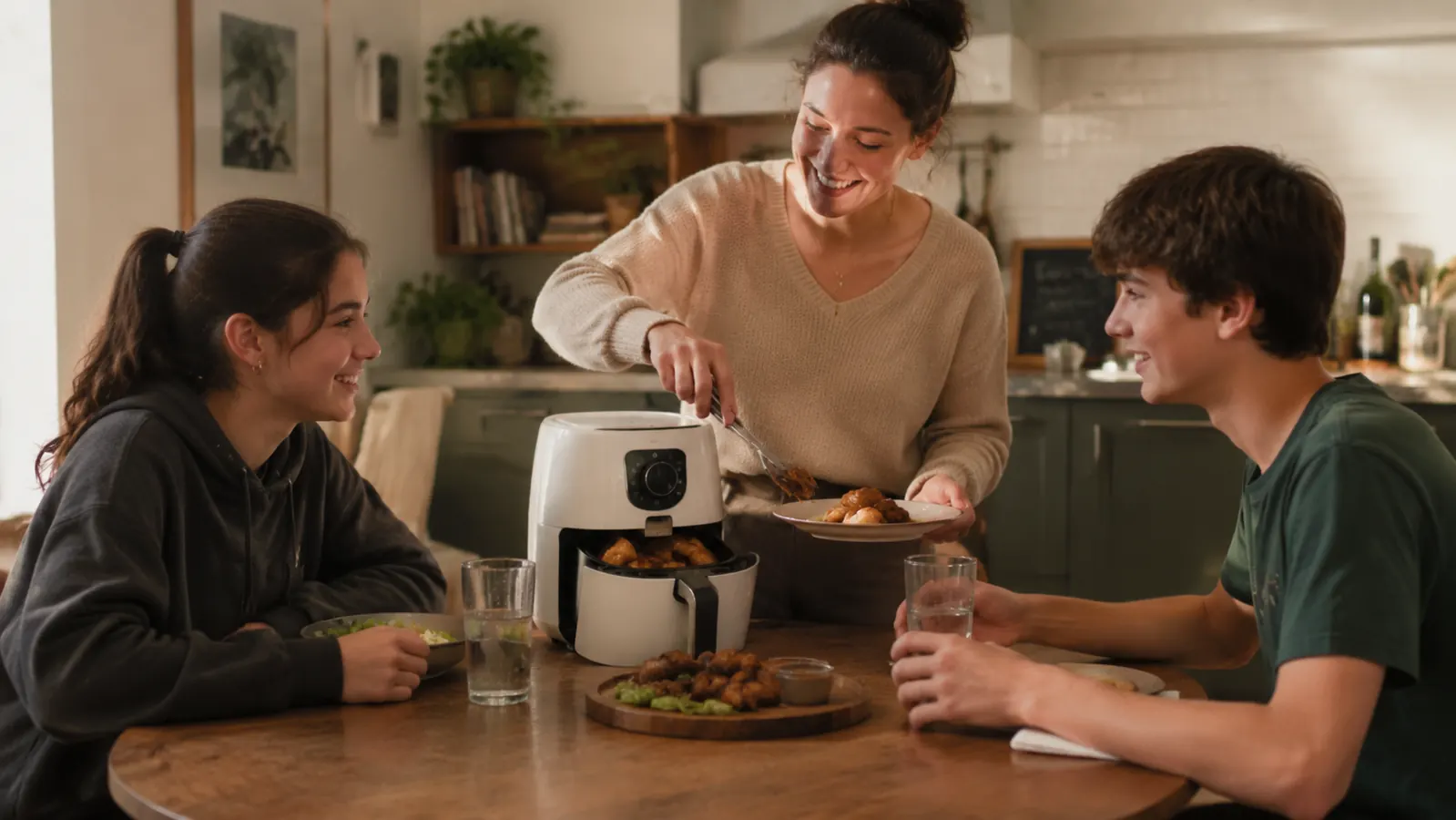
The Dash Tasti-Crisp is the right call for a single person or couple in a small apartment who wants to cook faster, crispier meals without turning on a full oven. It is also a good fit for someone who is genuinely new to air frying and wants to learn on a low-stakes machine before committing to a bigger, pricier unit. The price gives you permission to experiment, make mistakes, and figure out whether this style of cooking actually fits your habits. If it does, you will quickly know whether to stick with the Dash or step up to something with more capacity.
College students and people in dorms or shared housing situations will find it especially practical. The small footprint means it fits on a narrow shelf or shared counter without invading anyone else's space. And because it does not heat up the entire kitchen the way an oven does, it is easier to use in summer without raising the ambient temperature of a small room.
It is also quietly useful as a second appliance in a bigger kitchen where someone wants a fast single-serve option without heating up the main oven. One in a household with a functioning full-size oven is not redundant; it fills a specific niche for speed.
Who Should Skip It
Skip the Dash if you are cooking for three or more people on a regular basis. You will spend your evenings doing two or three batches of the same food while everyone else waits, which is not what a time-saving appliance is supposed to do. For families, the capacity upgrade to a four-quart or larger model is not a premium, it is a practical requirement. You will also find this frustrating if you want precise digital temperature control, if you cook a lot of large bone-in proteins, or if you want preset cooking modes that take the guesswork out of unfamiliar foods.
And if you are on the fence specifically because of the manual dials: that concern is valid, not just picky. For baking or precise protein cooking, the dial imprecision matters. For the foods this unit actually does well, it matters a lot less.
If two servings, a tight budget, and zero preheat time sound like what you need, the Dash is worth checking out.
It has over 34,000 Amazon reviews for a reason, and it earns its spot in the right kitchen. See the current price, color options, and what buyers are saying on Amazon before you decide.
Amazon Check Today's Price on Amazon →