
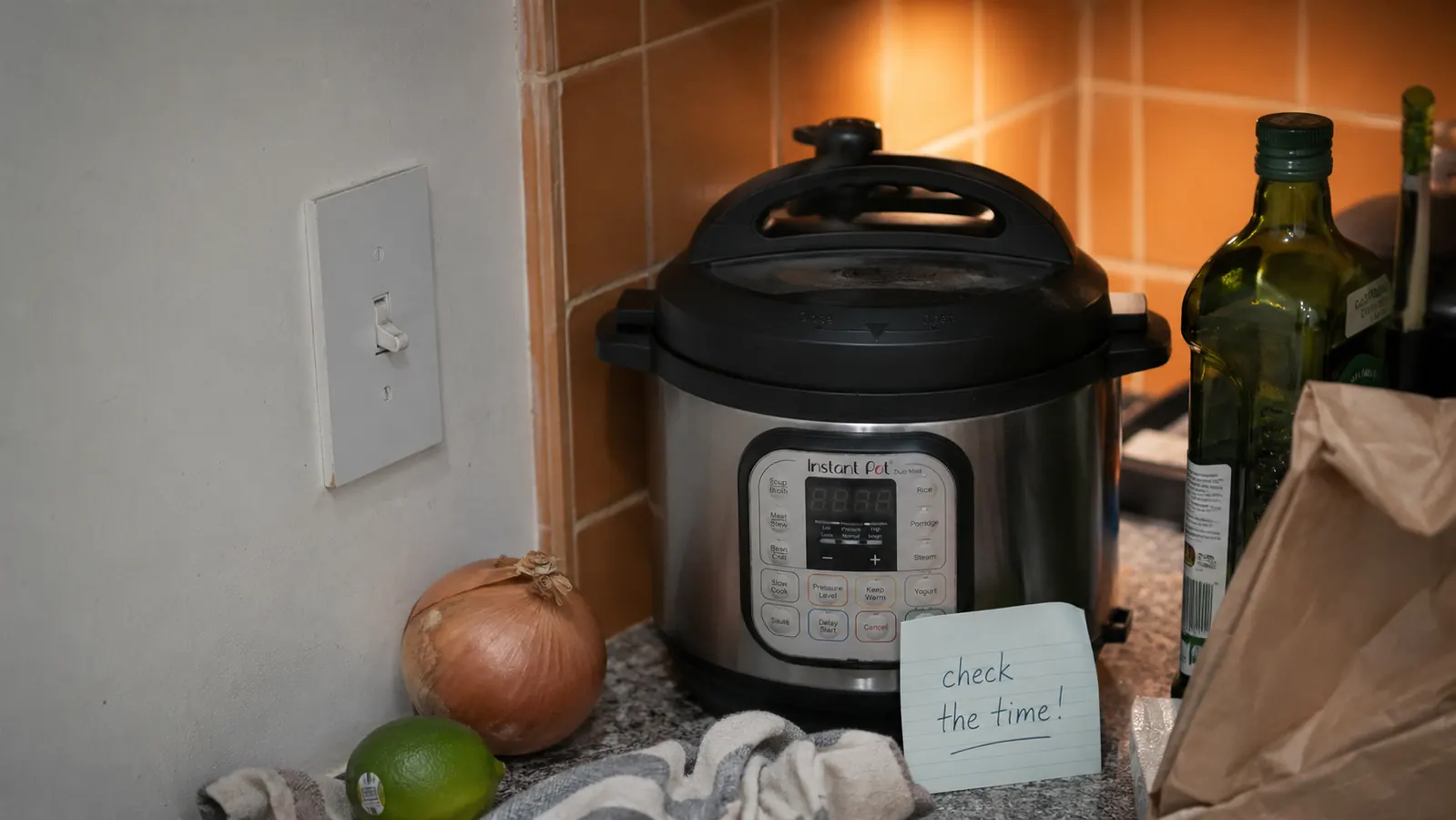
You have watched the YouTube reviews. You have read the Amazon listing. You know it does seven things in one pot, the star rating is 4.7, and nearly 185,000 people gave it a thumbs up. What you probably do not know is that the Instant Pot Duo Mini 3-Quart has a handful of real gotchas that those reviews skip right past. I bought mine on the recommendation of a coworker who uses hers for exactly two meals: soup and rice. Great. She loves it for those two things. But my kitchen situation is different, my family is bigger, and the first two weeks with this appliance were a lot more trial and error than I expected. This review is about what happens after the unboxing, when the learning curve is real and the stakes are Tuesday night dinner.
I want to be clear up front: I think the Instant Pot Duo Mini is genuinely a good appliance. I still use it regularly. But there are things I wish someone had told me before I bought it, and this is the review I wanted to read back then.
The Quick Verdict
A capable, compact multi-cooker that earns its spot in a small kitchen, but only after you understand the total-time math, the sealing ring smell trap, and the real usable capacity versus the advertised 3 quarts.
Amazon Check Today's Price →Still feeding your family on a stove that takes twice as long and heats up the whole kitchen?
The Instant Pot Duo Mini 3-Qt consistently ranks as the top pick for small-kitchen cooking among nearly 185,000 Amazon buyers. Check today's price before you decide, because the gotchas in this review are manageable once you know about them.
Amazon Check Today's Price on Amazon →The Total-Time Math Nobody Does For You
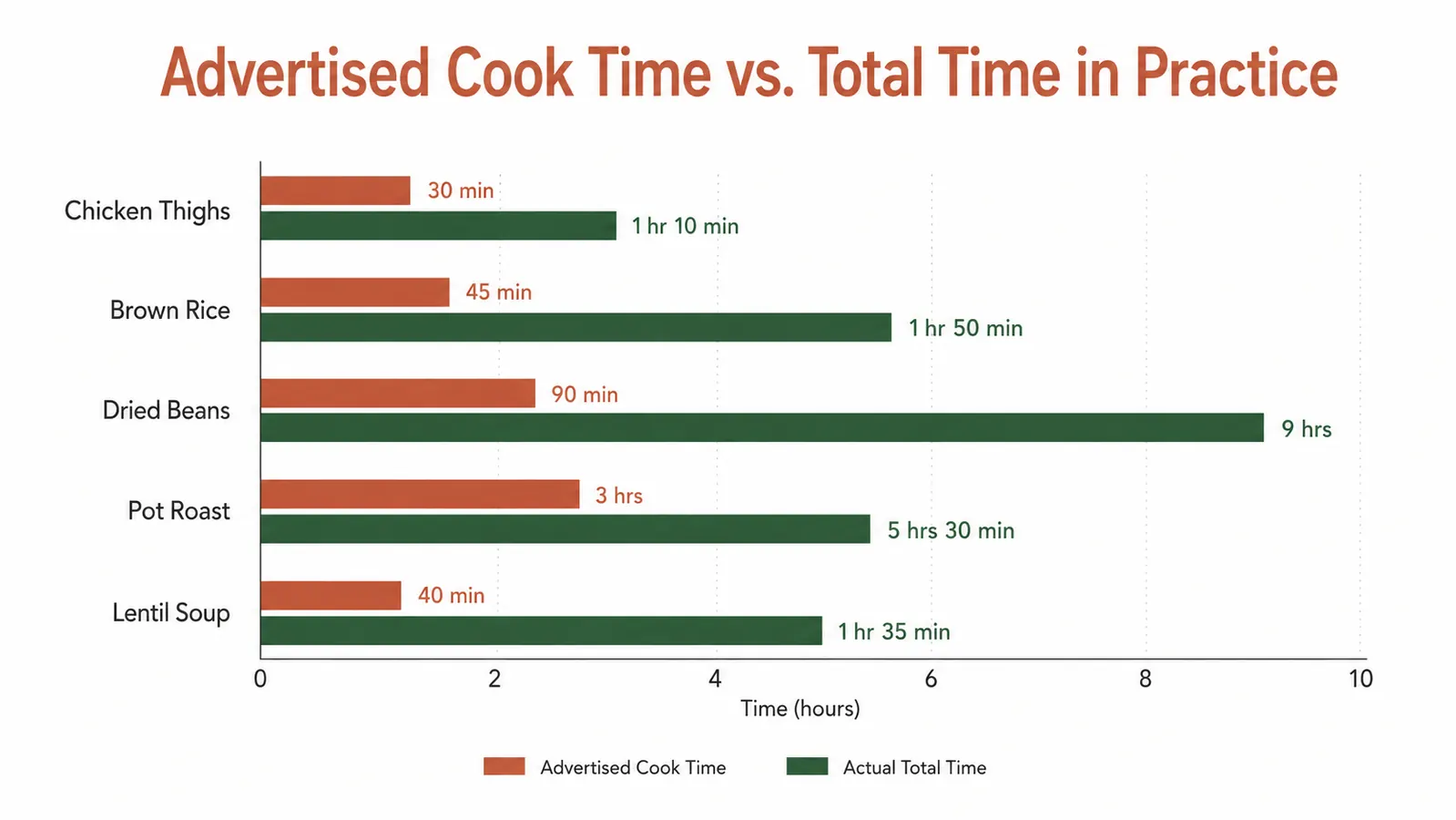
Here is the trap I fell into on day three. The Instant Pot Mini says it cooks chicken thighs in 15 minutes. Technically that is true. What it does not say is that you need to add 10 to 14 minutes for the pot to come to pressure before the 15-minute timer even starts. Then, depending on your recipe, you are either doing a quick release, which takes about two minutes and involves a cloud of steam hitting your upper cabinet, or a natural pressure release, which can add another 10 to 20 minutes while the pot slowly vents on its own.
Do the actual math for those chicken thighs: 10 minutes to come to pressure, 15 minutes at pressure, 15 minutes of natural release before the meat is safe to pull apart. That is 40 minutes. Not 15. And that does not include the 5 minutes of saute time I do beforehand to brown the skin, or the time to seal the lid properly and switch the valve. For a weeknight when I get home at 6:30 and everyone is hungry at 7:00, I have to plan for this or I am serving dinner at 7:45 and fielding complaints.
Once you know this, you plan for it. The fix is simple: start the pot earlier than you think you need to. But I want you to know it going in so the first week does not feel like the appliance lied to you, because that is exactly how it felt to me.
The Sealing Ring Smell Transfer Is a Real Problem
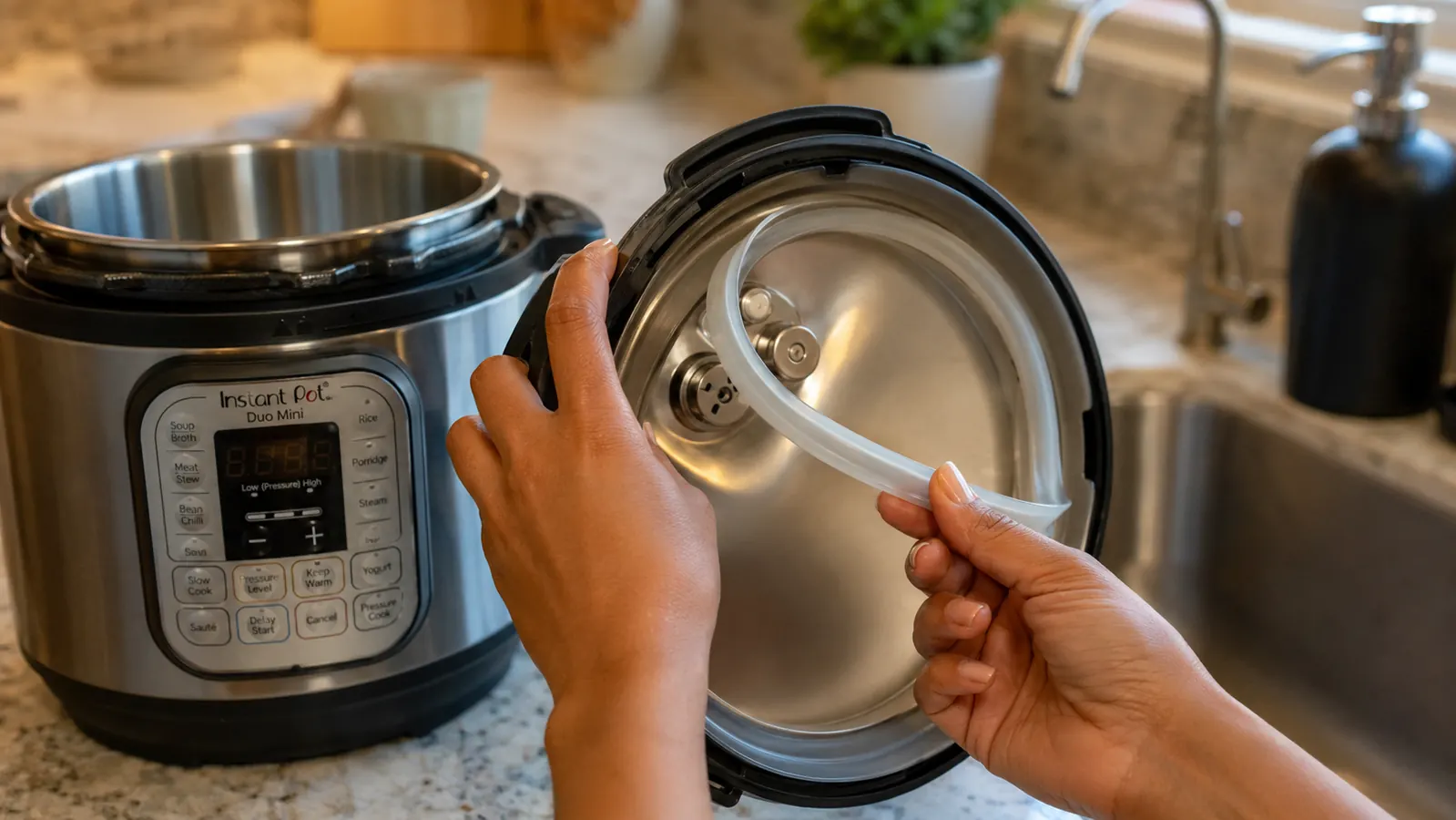
The silicone sealing ring that creates the airtight seal inside the lid absorbs odors. Deeply. After I made a batch of garlic-forward chicken soup, the ring smelled like the inside of a garlic bread for the next three cook sessions. My yogurt smelled faintly savory. My rice had a ghost of last week's stew. This is not a flaw in my unit specifically. It is a known property of silicone and something the Instant Pot community talks about constantly.
The practical solution is to buy a second sealing ring and dedicate one ring to savory cooking and one to anything mild or sweet. Instant Pot sells them for a few dollars and they come in different colors so you can tell them apart. The blue one is my savory ring. The red one is for yogurt and anything delicate. This works perfectly, but it is an extra purchase and an extra piece of information that I had to find on a Reddit thread at 11pm after my banana oatmeal tasted like a pot roast.
There is also a lesser-known trick: after you cook anything heavily spiced, remove the sealing ring and let it air out on a dish rack for a day rather than sealing it back inside the lid. The lid has a small storage spot where the ring slots in, but locking it back inside while the ring is still warm traps the smell. Leave it out. It takes 30 seconds less time than you think it does to reseat before the next cook.
The yogurt smelled faintly savory. The banana oatmeal tasted like a pot roast. That is when I learned that a second sealing ring is not optional, it is the actual solution.
The 3-Quart Capacity: What the Listing Does Not Tell You
Three quarts is the total volume of the inner pot. Instant Pot's own safety guidelines say do not fill a pressure cooker past two-thirds capacity for most foods, and no more than half full for foods that expand, foam, or have a lot of liquid. This means your real working capacity for a standard soup or stew is closer to 2 quarts. For anything with grains, beans, or pasta, it is closer to 1.5 quarts.
For one or two people, the 3-quart Instant Pot Mini is genuinely plenty. You can make full meals with room to spare. For a family of four like mine, 1.5 quarts of working space for beans or rice means I am cooking in the Instant Pot and then also cooking something else on the stovetop to fill out the meal. That happens more often than I expected when I bought it.
The pot roast situation from my third week is a good example. I found a recipe online for a 2-pound chuck roast in the 3-quart Instant Pot. Technically the roast fits in the pot. But two pounds of chuck plus the required cup of beef broth plus the carrots and potatoes I wanted to add put me right at the fill line. The roast came out fine, but the vegetables were so crammed in that the ones on top barely cooked, and the ones on the bottom were mush. My neighbor Janet uses the 6-quart, and the same recipe comes out evenly cooked every time because there is enough room for things to actually move around in the liquid. I am not saying the 3-quart is wrong for me, but that pot roast recipe is off my rotation now and I bought it thinking it was not.
The Steam Valve and the Cabinet Situation
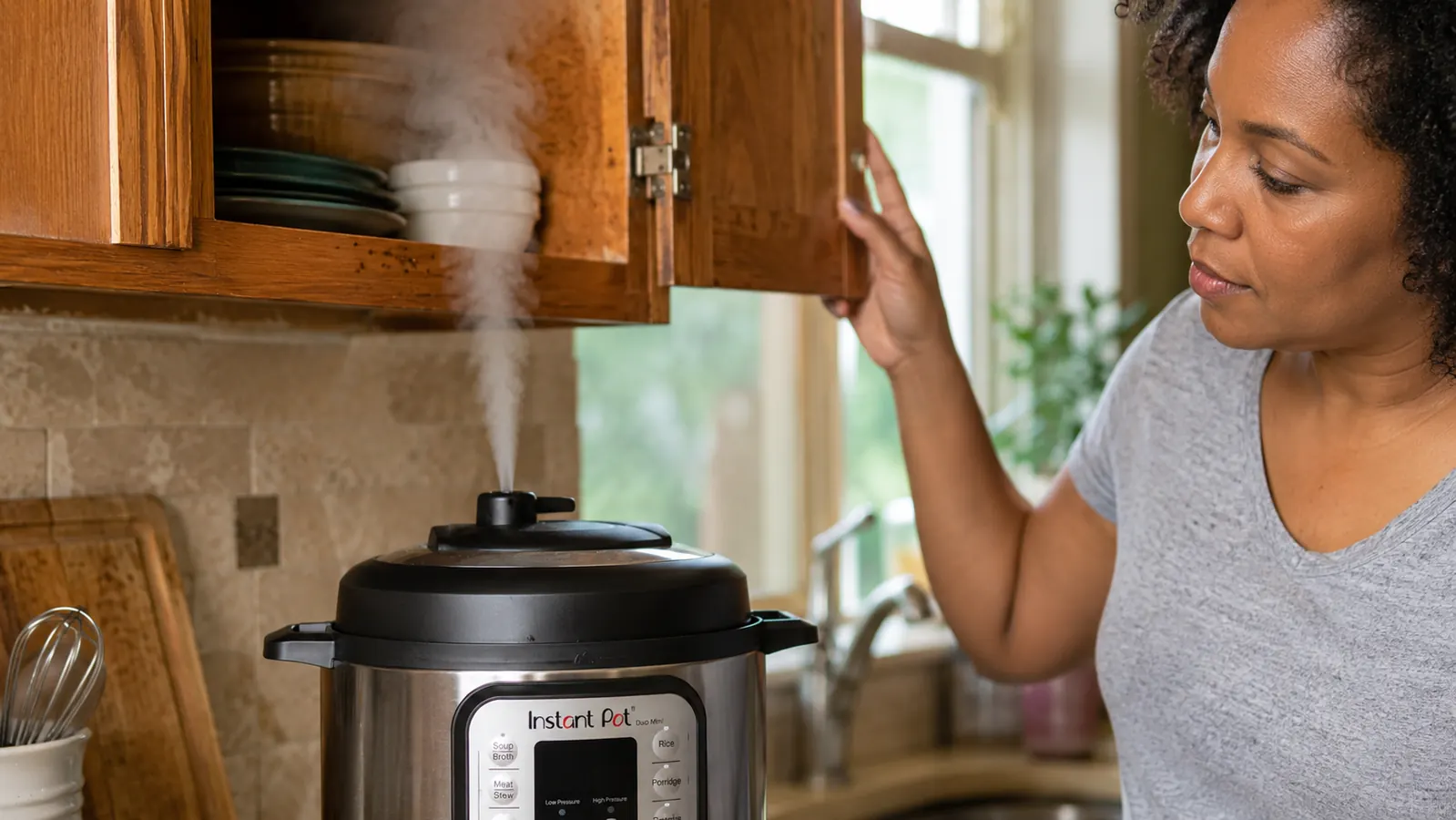
When you do a quick pressure release on the Instant Pot Mini, a jet of steam shoots straight up from the valve on the lid. If you have upper cabinets, that steam is going directly at them. Over time, repeated steam exposure can discolor cabinet paint, warp cheap particleboard, or deposit a faint residue on shelf surfaces. My cabinets are painted wood and after several months of quick releases I noticed the underside of the cabinet directly above the cooker had a faint watermark ring.
The fix is either to do natural pressure releases more often, which adds time but protects your cabinets, or to pull the Instant Pot out from under the cabinets to a spot on the counter where the steam can vent upward freely before you open the valve. I started doing the second thing by default and it is just a habit now, but I wish I had known to do it before I found that ring on my cabinet.
Also worth knowing: if the pot is overfilled and you attempt a quick release, liquid can spit out of the valve along with the steam. I had this happen once with a lentil soup that was a little too full. It sprayed a fine mist of orange liquid onto my backsplash and the side of the cabinet. Lentils stain. The lesson is that the fill line is not a suggestion.
Where the Instant Pot Mini Genuinely Wins
I have spent a lot of words on the gotchas, so let me be equally specific about where this appliance earns its spot on my counter, because it genuinely does. The pressure cooking speed on dried legumes is the thing I cannot replicate any other way. Dried lentils from scratch in 15 minutes, start to finish from the time I close the lid. Dried chickpeas from scratch in about 45 minutes, including a natural release, without any soaking the night before. If you cook beans and lentils regularly, this alone changes what you actually eat during the week, because the stovetop version requires a level of advance planning that just does not happen when you are getting home from a 12-hour shift.
The saute function is also genuinely useful. I can build a soup base directly in the pot, sweat onions and garlic in a bit of olive oil, add tomato paste and let it caramelize for two minutes, and then add my broth and pressure cook without ever dirtying a separate pan. The flavor is noticeably better than skipping that step, and the cleanup is one pot instead of two. That matters when your sink is as small as mine.
The build quality is solid. After regular use the display panel is still crisp, the stainless steel inner pot shows no warping or discoloration, and nothing about the machine feels cheap. At this price point and this use frequency, that was not guaranteed. The footprint on my counter is modest, roughly the size of a large dinner plate, and it tucks under my upper cabinets with about two inches of clearance. If you have very low upper cabinets, measure before you buy.
What I Liked
- Dried beans and legumes from scratch without soaking, dramatically faster than stovetop
- Saute function builds real flavor before pressure cooking, eliminating a second pan
- Compact footprint fits on a small counter and under standard upper cabinets
- Stainless inner pot handles regular dishwasher use without warping or staining
- 4.7-star rating across nearly 185,000 reviews reflects genuine long-term reliability
- Seven functions in one appliance reduces single-use gadget clutter
Where It Falls Short
- Total cook time is always longer than the advertised pressure cook time once you add preheat and release
- Silicone sealing ring absorbs strong food odors and requires a dedicated second ring for dairy or mild recipes
- Usable capacity for expanding foods is closer to 1.5 quarts, not the full 3 quarts listed on the box
- Quick steam release can damage upper cabinets and spit liquid if the pot is overfilled
- Recipes designed for 4 or more servings often hit the capacity ceiling and require workarounds
- The learning curve on pressure release methods takes a week of active trial before it feels natural
What I Would Tell You If You Texted Me Right Now
If you are cooking for one or two people and you want the most efficient small-batch cooker you can fit in a studio kitchen, get the 3-quart Mini without hesitation. It is the right size for your life and most of the gotchas I described will not affect you much, because you will never push the capacity ceiling and your cook times for small batches are fast enough that the preheat overhead is a smaller percentage of total time.
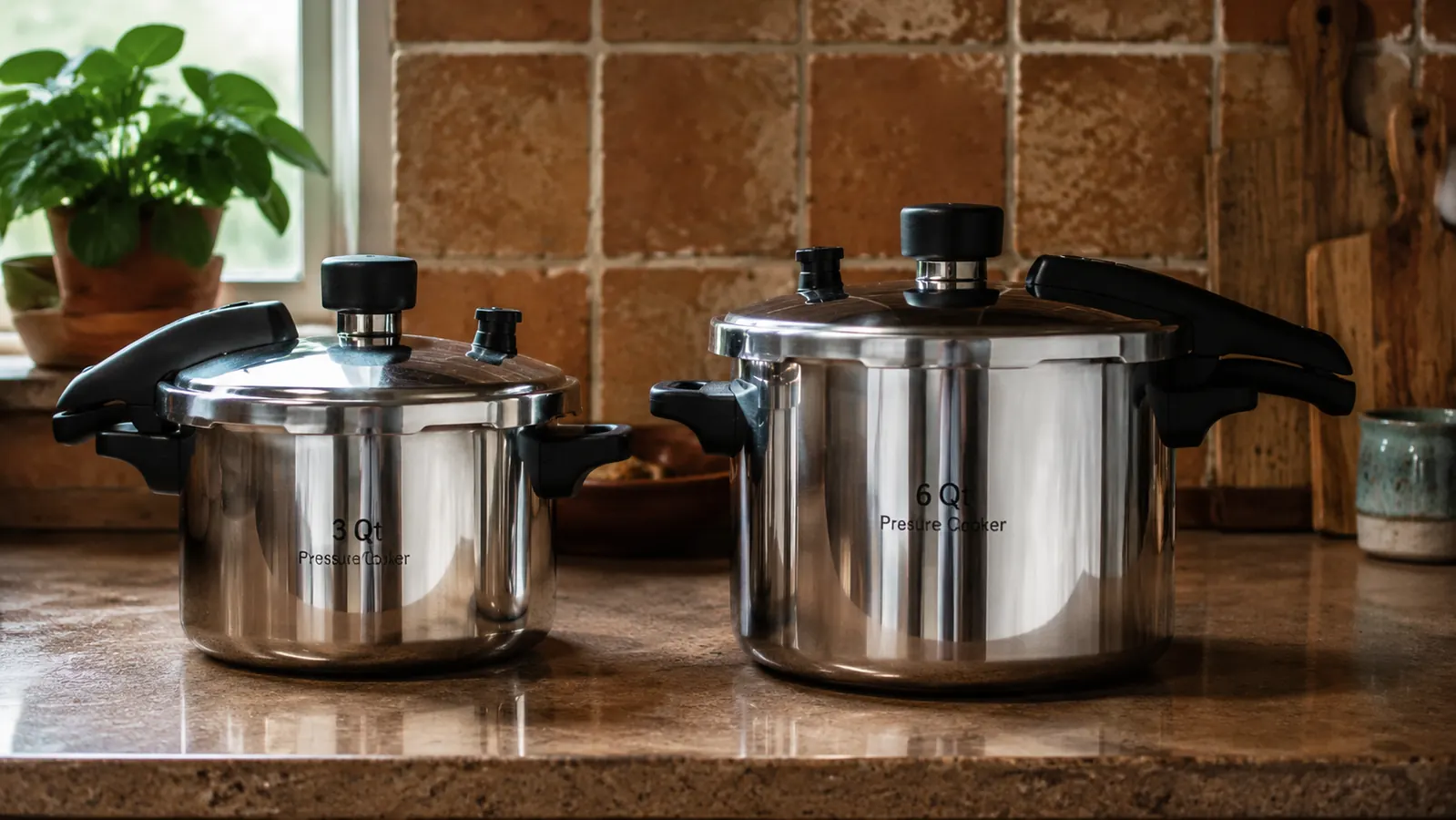
If you are cooking for three or four people regularly, think carefully. The 3-quart works for my family, but I have made peace with its ceiling. I do not try to batch-cook large quantities or do proteins that need room to cook evenly in liquid. I use it for soups, beans, lentils, grains, and yogurt, and I supplement on the stovetop for anything that needs more volume. If that kind of split-cooking workflow sounds like a hassle rather than a reasonable trade-off, consider the 6-quart. It is a larger footprint and heavier to move when cleaning the counter, but the capacity difference removes most of the constraints I described. You can read more about that choice in my piece on the Instant Pot Mini 3-Qt vs 6-Qt comparison.
Whatever size you land on, do two things before your first real meal: run the water test the manual describes to learn how pressure build and release actually feels without the pressure of a dinner deadline, and order a second sealing ring the same day the cooker arrives. Both moves will save you a frustrating first week. You can also check out how to meal prep for one with a mini pressure cooker for practical recipe ideas that play to the Mini's strengths.
Who This Is For
The Instant Pot Duo Mini is an excellent fit for small households, people who cook plant-based meals that lean heavily on legumes and grains, and anyone who wants to consolidate several single-use appliances into one compact unit. It is also a good choice for someone with limited stovetop space who wants to free up two burners at dinner time. The 7-in-1 functionality is not marketing language. The saute, pressure cook, slow cook, steam, and yogurt functions all work as advertised, and using just three of them regularly is enough to justify the counter space.
Who Should Skip It
If you regularly cook for five or more people, or if you want to make large batches and freeze portions for the month, the 3-quart will frustrate you within the first two weeks. The capacity ceiling is real and there is no workaround that makes it disappear. You will spend more time cooking in batches and more time cleaning between rounds than you expected. Get the 6-quart and give up the counter space.
If you are not willing to spend one week reading the manual and doing the water test before cooking real food, this appliance will also disappoint you. Pressure cookers have a small but real learning curve around valve positions, fill lines, and release methods. It is not complicated once you know it, but it is not as plug-and-go as a drip coffee maker either. The people who say this machine is hard are almost always the ones who skipped that first week. Do not skip it.
Now that you know the gotchas, the decision is a lot simpler.
The Instant Pot Duo Mini 3-Qt earns its place in small kitchens once you know what to expect going in. Buy a second sealing ring with it, do the water test on day one, and plan your cook times with the preheat included. It is rated 4.7 stars across nearly 185,000 reviews for a reason. Check today's price and current availability on Amazon.
Amazon Check Today's Price on Amazon →